Secondary schools do not need a miracle program to strengthen reading. A well-run peer-tutoring lab can create more reading practice, more feedback, and more confidence using the students and staff already in the building.
Reading improvement in grades 6-12 is one of the hardest jobs in school improvement. By middle and high school, students are expected to read to learn in every subject, yet many are still working to build fluency, vocabulary, and comprehension. Teachers know this. They also know the practical barriers: packed schedules, large classes, staffing shortages, uneven attendance, and the reality that adding a brand-new intervention often means adding one more burden to an already full day.
A peer-tutoring lab is not a silver bullet. But it can be a practical, affordable structure for giving adolescents something they often do not get enough of: repeated reading practice, immediate feedback, and a reason to keep trying.
Why secondary literacy needs a different answer
The need is real. On the 2022 National Assessment of Educational Progress, often called the Nation’s Report Card, average reading scores fell for both 8th graders and 12th graders compared with earlier years. NAEP also reported that many students performed below proficiency, a reminder that literacy challenges do not disappear after elementary school.
In secondary schools, reading difficulty often hides in plain sight. A student may decode adequately but struggle to make sense of science text, historical documents, or word problems in algebra. Another may read far below grade level but work hard enough to mask it. Teachers across departments are then asked to teach content and reading at the same time, usually with too little planning time and too few intervention staff.
This is where schools can feel stuck. Hiring more reading specialists would help, but many districts cannot do that quickly or at all. Extending the day may sound attractive, but transportation, contracts, athletics, and family responsibilities get in the way. What schools can often do, however, is reorganize existing time and human capacity.
What a peer-tutoring lab actually is
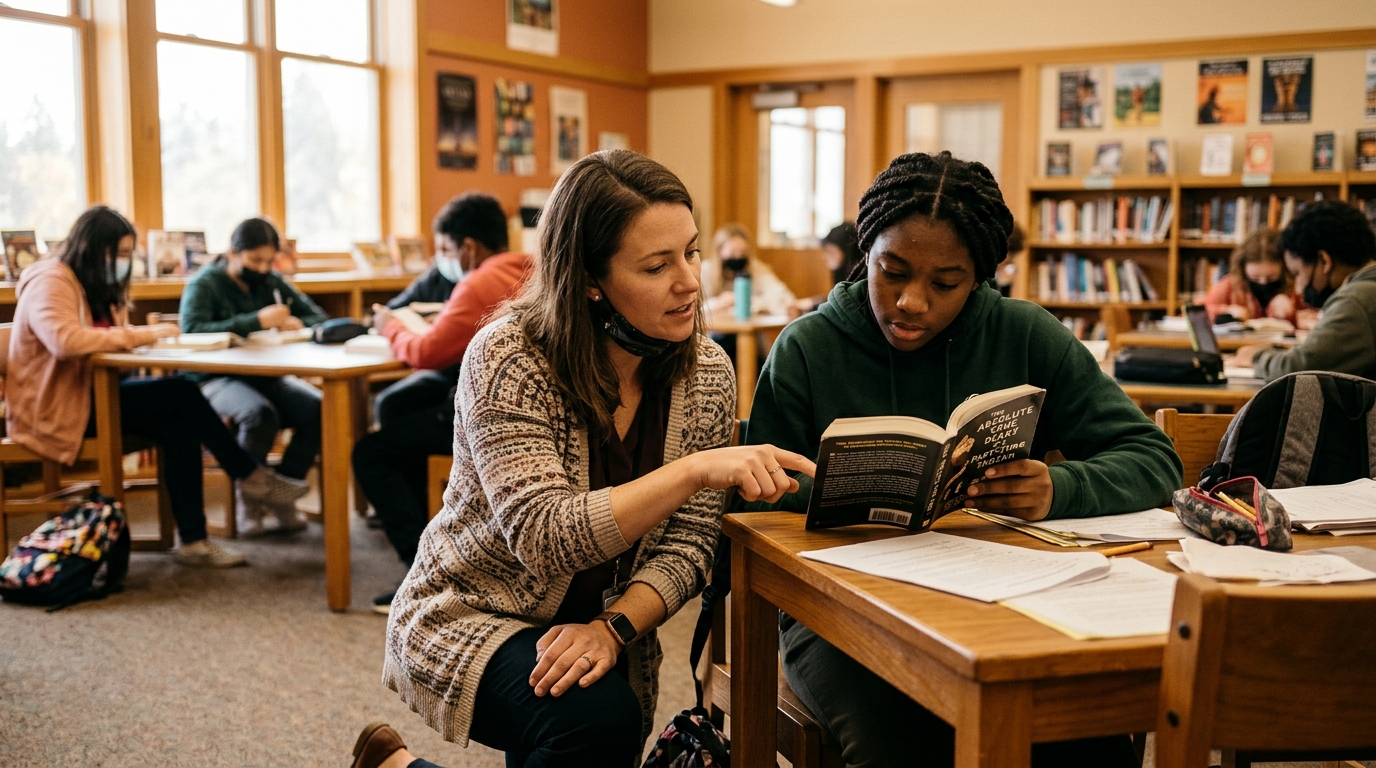
A peer-tutoring lab is a scheduled period, center, or class structure in which trained students support other students’ reading growth under adult supervision. The key word is trained. This is not “just put kids together and hope for the best.” It is a routine, monitored literacy support model.
In a secondary setting, tutors might be older students in grades 10-12, students enrolled in leadership or education pathway courses, members of National Honor Society, multilingual learners with strong academic habits, or classmates paired strategically within the same grade. Sessions usually run 20 to 40 minutes and focus on a narrow set of reading moves: previewing text, reading aloud, summarizing, annotating, vocabulary practice, and checking for understanding.
A lab can happen during advisory, intervention blocks, study halls, elective periods, or rotating flex time. In some schools, it lives in the library or literacy classroom. In others, it is embedded in content-area support. The point is not the room. The point is creating a reliable structure where more students get more opportunities to read and talk about text.
Why peer tutoring can work for adolescents
Adolescents are highly responsive to peer influence. Schools often experience that fact as a challenge, but it can also be a strength. Many students will take a reading risk with a peer before they will take it in front of a whole class.
Peer tutoring also increases what schools most need and often cannot buy enough of: attention. One teacher with 30 students cannot listen to every student read, prompt every summary, and correct every misunderstanding in one period. A trained peer tutor can add another layer of practice and accountability.
There is a commonsense reason this matters. Reading improves when students actually read, when someone notices whether they understood, and when they get quick correction before confusion hardens into habit. A peer-tutoring lab creates more of those moments without requiring a new full-time hire.
Internationally, high-performing systems such as Estonia, Singapore, Finland, and parts of Canada are often cited for strong literacy results on PISA, the Programme for International Student Assessment run by the OECD. Their contexts differ from those of US schools, and borrowing policies whole cloth rarely works. Still, one useful lesson appears again and again: students benefit from coherent support, strong routines, and shared responsibility for literacy across the school. A peer-tutoring lab fits that lesson because it makes reading a collective effort rather than the job of one overextended specialist.
What the lab should and should not do
A successful lab is focused. It should not try to replace expert reading intervention for students with significant decoding difficulties or identified disabilities who need specialized instruction. It should not turn tutors into mini-teachers responsible for grades or discipline. And it should not become free babysitting under a new name.
What it can do well is reinforce core habits. Students can practice repeated oral reading for fluency, discuss short texts, break down academic vocabulary, use sentence frames to summarize, and preview upcoming class readings. Tutors can model annotation, ask simple comprehension questions, and help peers monitor whether a passage makes sense.
The strongest versions align with classroom learning. If 7th graders are reading argumentative texts in English or primary sources in social studies, the lab should support those demands. If 10th graders are struggling with biology vocabulary, the lab can preview terms and text structures before the lesson. Literacy grows faster when support is connected to real coursework.
The conditions that make it credible
For school leaders, credibility matters. Teachers are right to be wary of initiatives that sound good but add work without support. A peer-tutoring lab earns trust when it includes four nonnegotiables.
First, tutors need training. They should learn how to prompt rather than give answers, how to listen to a reader, how to praise specifically, and when to refer a problem to the supervising adult. Even two or three short training sessions can make a major difference.
Second, materials must be simple and consistent. Use short passages, vocabulary routines, annotation guides, and progress logs that are easy to manage. If the paperwork is too heavy, the lab will collapse under its own weight.
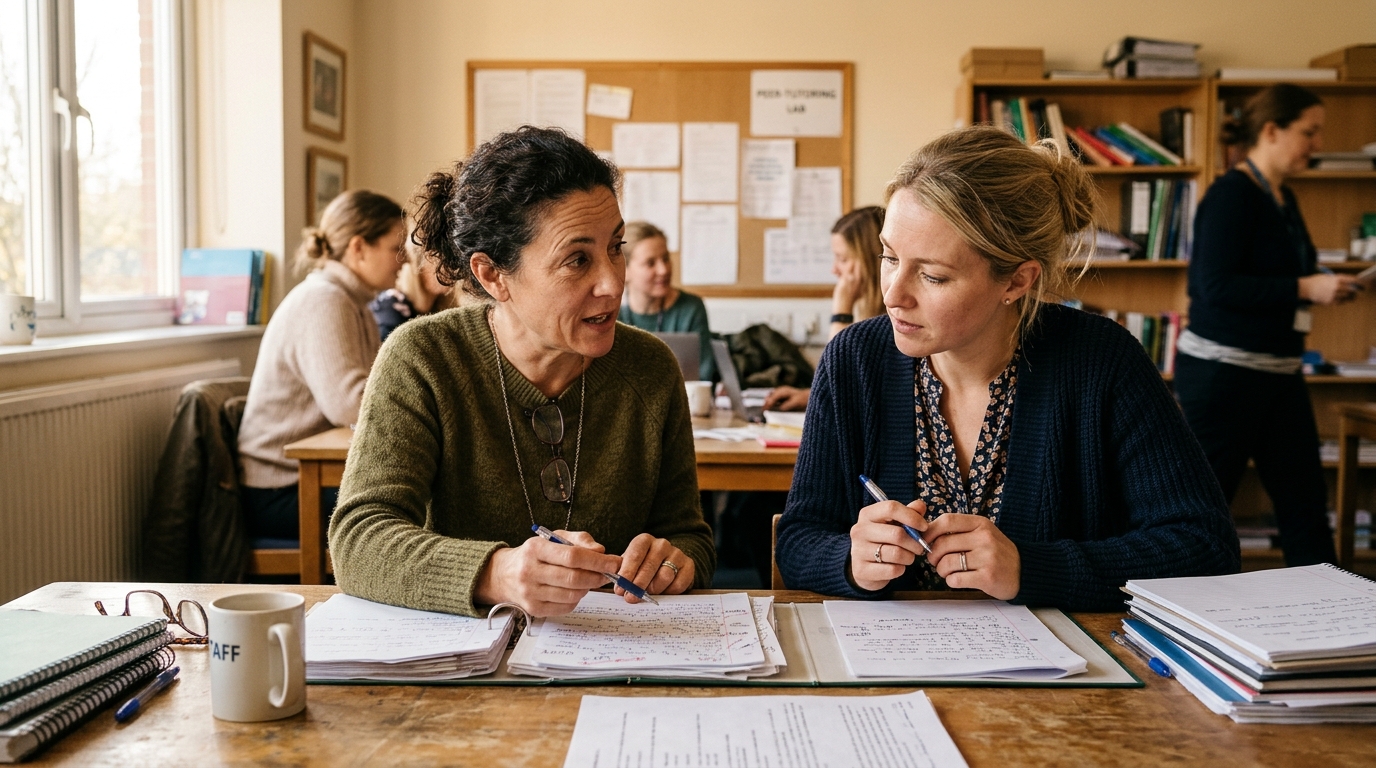
Third, the supervising adult needs a clear role. This might be a reading specialist, ELA teacher, librarian, interventionist, or administrator during a dedicated block. That adult monitors pairings, coaches tutors, checks data, and protects quality.
Fourth, schools should measure something modest but meaningful. Attendance, passage completion, fluency checks, class reading grades, and student confidence surveys can all help schools see whether the lab is helping. Not every improvement needs a complicated dashboard.
Realistic ways to start without new hires
Most schools do not need to launch a full-scale program on day one. Start smaller.
Choose one grade level or one course with clear reading needs. Use an existing period such as advisory or flex time. Recruit a small group of dependable tutors and train them with scripts and modeled practice. Keep sessions short and predictable.
Build tutor pride carefully. Adolescents respond to responsibility when it is real. Give tutors a visible role, a certificate, elective credit if your schedule allows, or service-learning recognition. Just as important, protect tutees’ dignity. Avoid labels that make the lab feel like a public sorting system.
Involve content teachers early. Ask what texts students are stumbling over and what vocabulary keeps blocking understanding. A peer-tutoring lab is most helpful when it supports the literacy demands students face all day, not only in English class.
Finally, be honest about what the lab can solve. It can increase practice, confidence, and connection. It can help students keep up with assigned reading and build routines around comprehension. It may not erase years of missed instruction in one semester. But in schools where budgets are tight and needs are high, that kind of steady gain matters.
A practical next step for schools
If your school is trying to raise literacy rates without waiting for perfect staffing, a peer-tutoring lab is worth serious consideration. It respects the limits schools are under while making better use of the strengths already in the building.
Start with one question: where in our schedule could students read more, with support, every week? Then build a small, supervised system around that answer. In a time when many educators are being asked to do more with less, the most hopeful ideas are often the ones that create more human attention, not just more programs. A peer-tutoring lab can do exactly that.