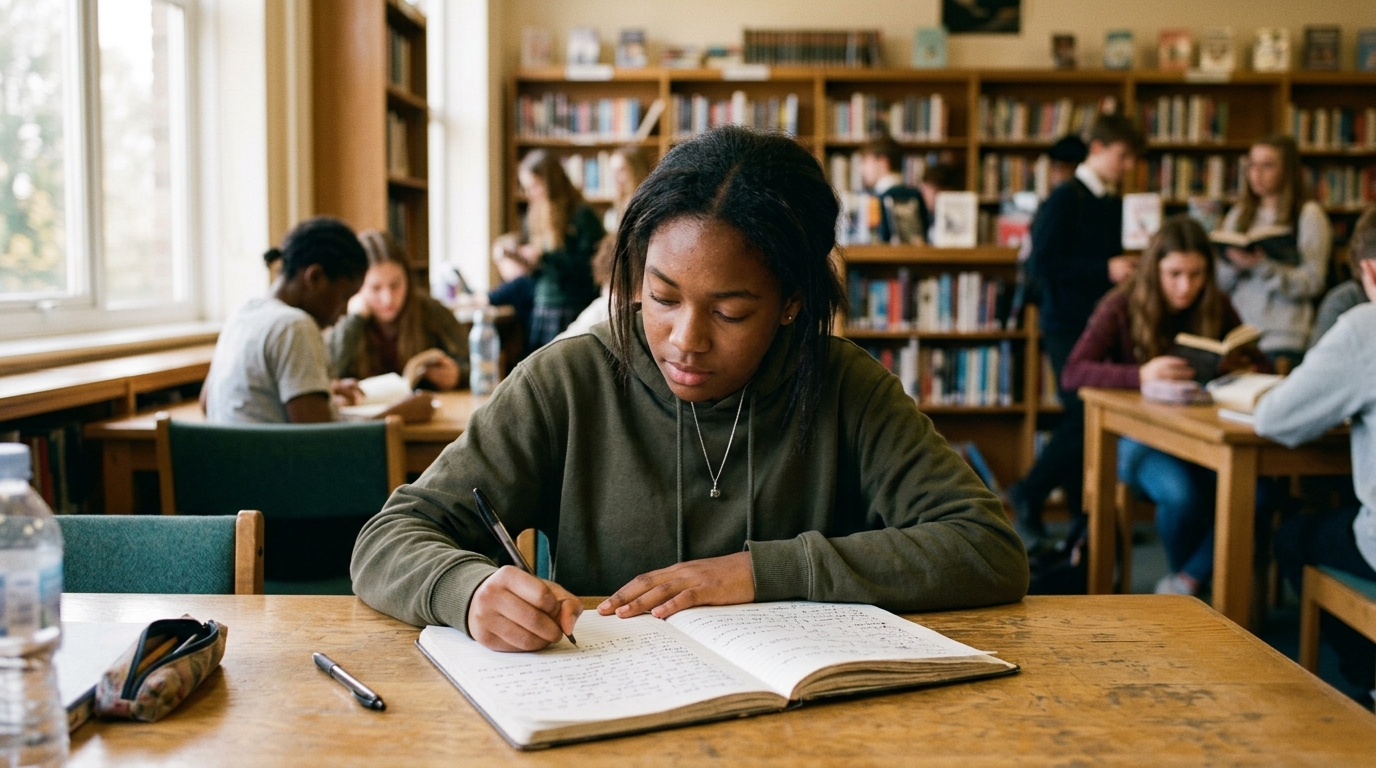
When absences interrupt learning, secondary students can lose far more than class time: they lose confidence, fluency, and access to grade-level reading. A well-designed peer-tutoring homeroom offers schools a realistic way to rebuild literacy without pretending teachers have extra hours to spare.
When absence becomes a reading problem
In secondary schools, reading struggles often hide in plain sight. A student can sound fine in conversation, keep up socially, and still be quietly shut out of textbooks, word problems, science articles, and written directions. Add repeated absences, and that gap widens fast.
This matters because reading in grades 6-12 is no longer just about learning to read. It is about reading to learn in every class. When students miss school, they do not only miss assignments. They miss vocabulary, background knowledge, routines, discussion, and the guided practice that helps hard texts become manageable.
The national picture is sobering. On the 2022 National Assessment of Educational Progress, often called the Nation's Report Card, average reading scores fell for both 8th graders and 12th graders compared with earlier years. In 2023, NAEP also reported that average reading scores for 13-year-olds were lower than in previous assessment years. Those numbers do not tell us everything about a child, a classroom, or a school, but they do confirm what many educators already know: too many adolescents are struggling to regain reading ground after disruption.
Schools cannot solve chronic absence with one intervention. Family responsibilities, illness, transportation, housing instability, mental health needs, and disengagement all play a role. Still, schools can build structures that help students recover academically when they return. One practical structure is a peer-tutoring homeroom focused on reading.
Why a homeroom model makes sense
Most secondary schools do not have the luxury of adding a brand-new literacy block. Schedules are crowded. Staffing is tight. Intervention periods are often already full, and content teachers are carrying a heavy load. That is why homeroom, advisory, or flex periods deserve a closer look.
A peer-tutoring homeroom does not ask schools to reinvent the day. It uses an existing slice of time, often 20 to 35 minutes, to provide consistent reading support for students who have missed instruction and need a structured way back in.
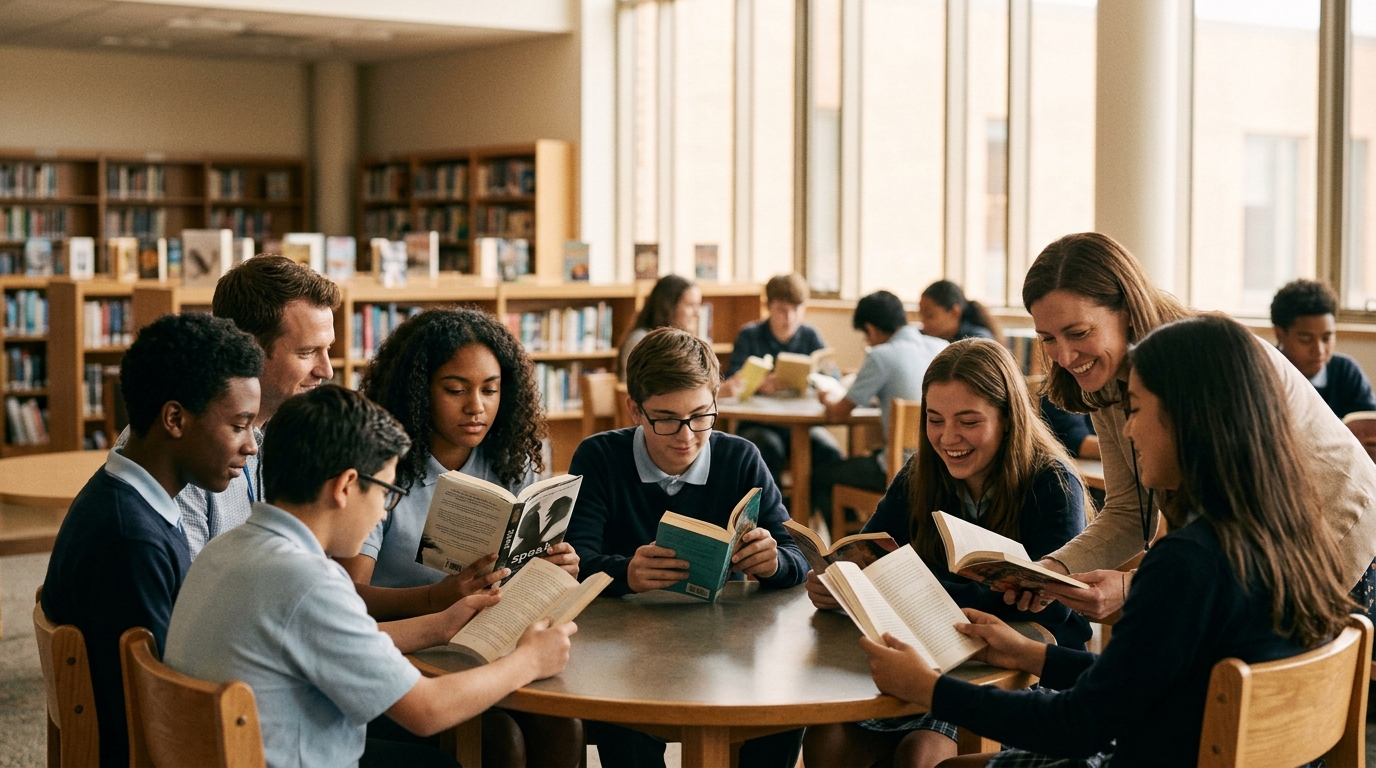
The idea is simple: train older or more proficient students to work with peers on short, targeted reading routines. These are not mini-teachers replacing professionals. They are reading partners working within a clear plan created by adults. The homeroom becomes a place where returning students can reconnect with texts, practice fluency, rebuild comprehension, and preview the language of upcoming classes.
For adolescents, this matters. Many students who have been absent do not want to be singled out for "remedial" help. Peer support can lower the emotional temperature. It can make practice feel social, normal, and possible.
What the tutoring actually looks like
The strongest version of this model is not random homework help. It is brief, predictable, and tightly structured.
A typical session might include four parts: a short check-in, a fluency or vocabulary warm-up, guided reading of a high-interest or content-connected text, and a quick written response. Tutors might use repeated reading, partner summarizing, annotation prompts, and sentence frames for discussion. They can help a student unpack directions, identify key ideas, and rehearse academic language before it shows up in English, science, or history class.
For example, a 9th grader returning after a week of absences might read a short article related to biology, highlight essential terms, practice a summary aloud, and complete a brief response using a frame such as, "The central idea is __ because __." That does more than patch one assignment. It strengthens the reading habits the student needs across the day.
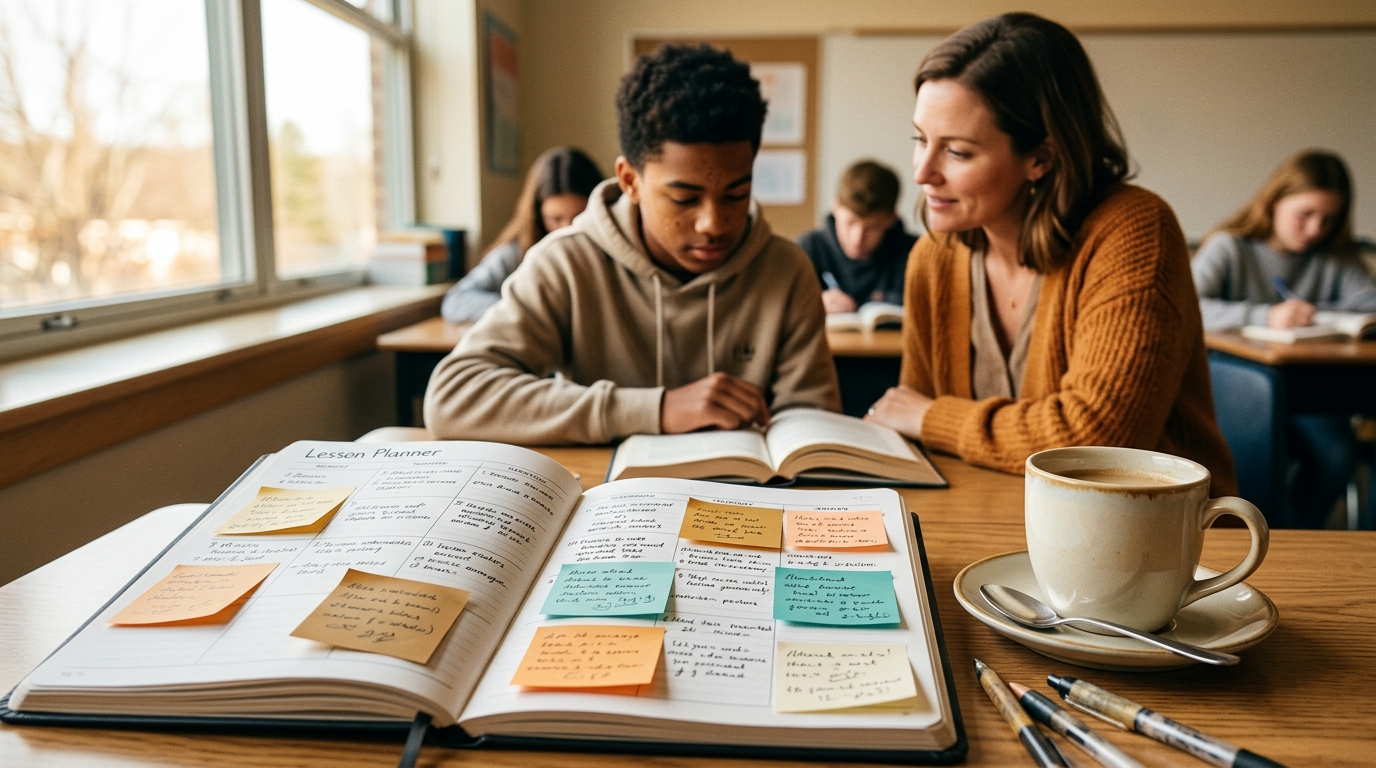
The adult role remains crucial. Teachers or literacy specialists choose materials, teach the routines, monitor pairings, and step in when students need more intensive support. Peer tutors are there to increase practice opportunities, not to diagnose reading disabilities or deliver specialist instruction.
Why peers can help adolescents reengage
Secondary students often learn powerfully from one another. A capable peer can model how to approach a dense paragraph, how to stop and summarize, or how to ask, "What does this word mean in this class?" Sometimes a student will admit confusion to a peer more quickly than to an adult.
There is also a motivation benefit. Adolescents care deeply about belonging. A homeroom that says, in effect, "You were out, and we have a place for you to reconnect" can interrupt the shame spiral that follows missed work. Students who feel behind often avoid reading because reading exposes how behind they feel. Peer tutoring gives them a low-stakes bridge back in.
Internationally, some of the highest-performing systems in reading, including places such as Singapore, Estonia, and parts of Canada, are often noted for coherence: strong curriculum, teacher preparation, and timely support when students struggle. The lesson for U.S. schools is not to copy another country's system wholesale. It is to recognize that recovery works better when support is routine, not occasional, and embedded into the school day.
The limits schools have to respect
This kind of homeroom is promising, but it is not magic. Schools need to be honest about what it can and cannot do.
First, peer tutoring will not replace high-quality reading instruction. Students still need knowledgeable teachers who can explicitly teach comprehension, vocabulary, disciplinary literacy, and, for some students, foundational skills that were never secured.
Second, implementation takes planning. Pairing students poorly can backfire. Older students need training in confidentiality, encouragement, attendance routines, and what to do when a partner is stuck. Adults need a simple way to track whether students are attending homeroom, what texts they worked on, and whether skills are improving.
Third, some students need more than peer support. Students with significant decoding difficulties, language-based disabilities, or very interrupted schooling may require specialist intervention, bilingual support, or intensive small-group instruction. A homeroom can complement those services, but not substitute for them.
And finally, schools have to protect dignity. No teenager wants to feel labeled. The best programs make participation normal, flexible, and connected to success, not punishment.
How to build a realistic model
A workable peer-tutoring homeroom usually starts small. One grade level. One advisory period. A limited number of trained tutors. A short menu of routines used across classrooms.
Begin by identifying students whose absences are affecting reading-heavy coursework. Do not wait for failure in every class. Use practical signals: missed assignments tied to reading, difficulty summarizing texts after returning, weak quiz performance on reading-based content, or teacher reports that a student cannot access the material independently.
Then recruit tutors carefully. Strong candidates are not only high achievers. They are patient, reliable, and respectful. A student who can listen well and follow a routine may be more effective than one with the highest GPA.
Training should be brief but explicit. Show tutors how to prompt rather than tell, how to praise effort specifically, how to use a script for partner reading, and when to refer a problem to an adult. Give them a narrow toolkit they can use confidently.
Materials matter too. Texts should be short enough to complete in one sitting, interesting enough to sustain adolescent attention, and connected enough to coursework that students feel the payoff quickly. Many schools make this easier by using common routines across subjects: annotate for main idea, define key vocabulary in context, summarize in two sentences, and answer one evidence-based question.
What schools can do next week
If your school wants to try this, keep the first version manageable.
Choose one homeroom or advisory period and run a six-week pilot.
Train a small group of peer tutors with one adult coordinator.
Use a simple session template for every meeting so students know what to expect.
Focus on students returning from repeated or recent absences, especially in grades where reading demands jump sharply.
Track a few useful indicators, not dozens: attendance at the homeroom, completion of reading tasks, teacher reports of classroom reentry, and short comprehension checks.
Meet every two weeks to adjust pairings and materials.
Most important, connect the literacy work to belonging. Greet students by name. Celebrate completed texts. Let success be visible.
Secondary schools are being asked to solve real literacy problems under very real constraints. That is exactly why a peer-tutoring homeroom is worth considering. It is not flashy. It does not promise overnight recovery. But it can create something many students need after absences: steady practice, human connection, and a clear path back into reading that feels possible again.