Singapore’s reading success did not come from a miracle program. It came from coherence: strong teacher preparation, deliberate curriculum, and consistent support for adolescent readers—lessons American middle and high schools can adapt realistically.
When Americans talk about literacy, the conversation often centers on the early grades. That makes sense: children need strong foundations in decoding, vocabulary, and fluency. But secondary schools inherit the long tail of the problem. Students in grades 6–12 are expected to read science explanations, historical arguments, technical manuals, novels, primary sources, and digital media—often without the support they still need.
The results are visible in the data. On the 2022 National Assessment of Educational Progress, often called the Nation’s Report Card, average reading scores fell for both 8th and 12th graders compared with earlier years, continuing a longer pattern of concern. On international comparisons, the United States typically lands around the middle of the pack rather than among the top-performing systems. On the 2022 Programme for International Student Assessment, or PISA, Singapore was the top-performing education system in reading, while countries such as Estonia and Canada also performed strongly.
No country offers a simple template for the United States. American schools serve a vast, diverse population across fifty state systems, with deep variation in funding, staffing, and local control. Still, Singapore’s literacy story is worth studying because it is not built on slogans. It is built on a disciplined set of choices about curriculum, teaching, and support.
What Singapore gets right
Singapore’s success in reading is not just about teaching children to read in the primary years. It is about building a system in which literacy remains everyone’s work as students move into adolescence.
First, Singapore treats curriculum as a public good, not a scavenger hunt. Teachers are not left to assemble instruction from disconnected materials. There is a clearer national framework for what students should read, discuss, and write, and how those demands build over time. In secondary education, that coherence matters. Many American middle and high school teachers know the frustration of receiving students with uneven skills while also being expected to cover complex content at pace. A more coherent pathway does not solve every gap, but it lowers the cognitive load on teachers and students alike.
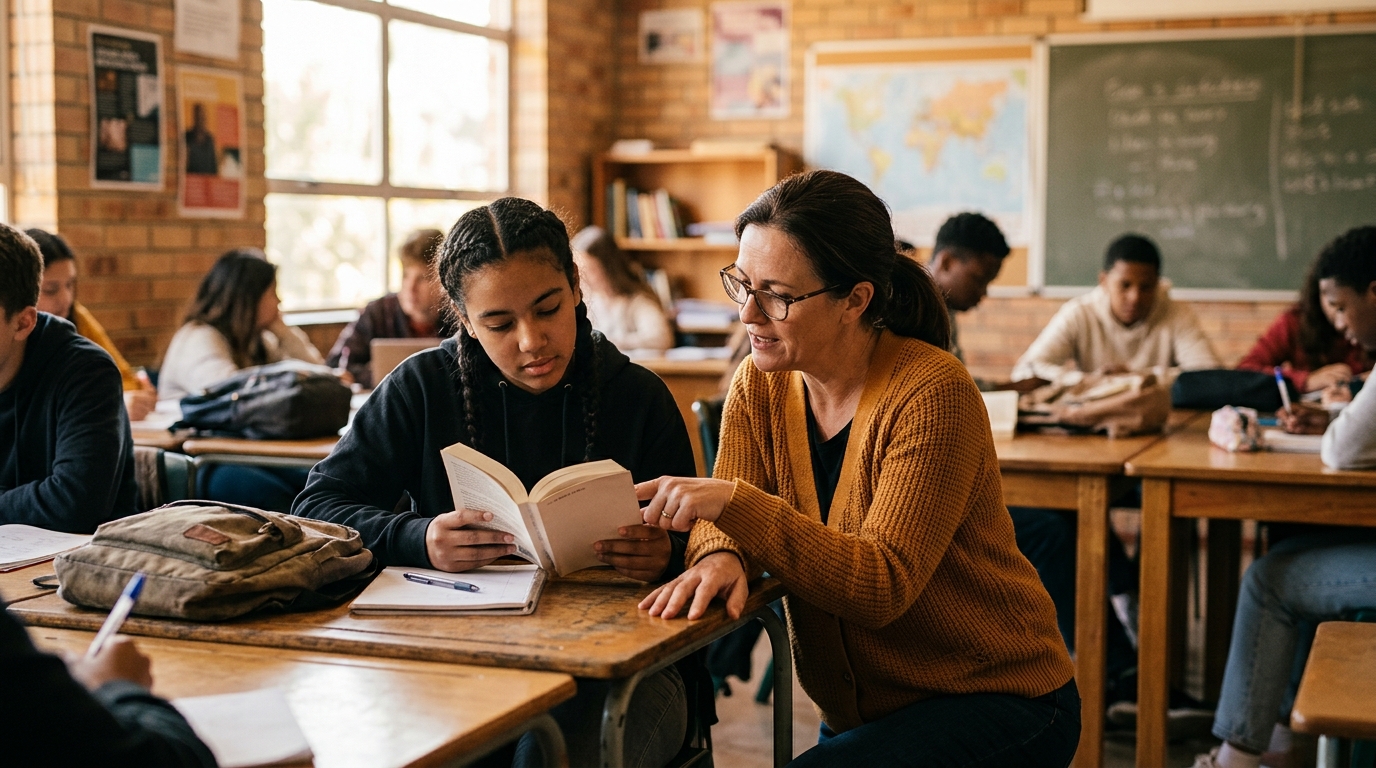
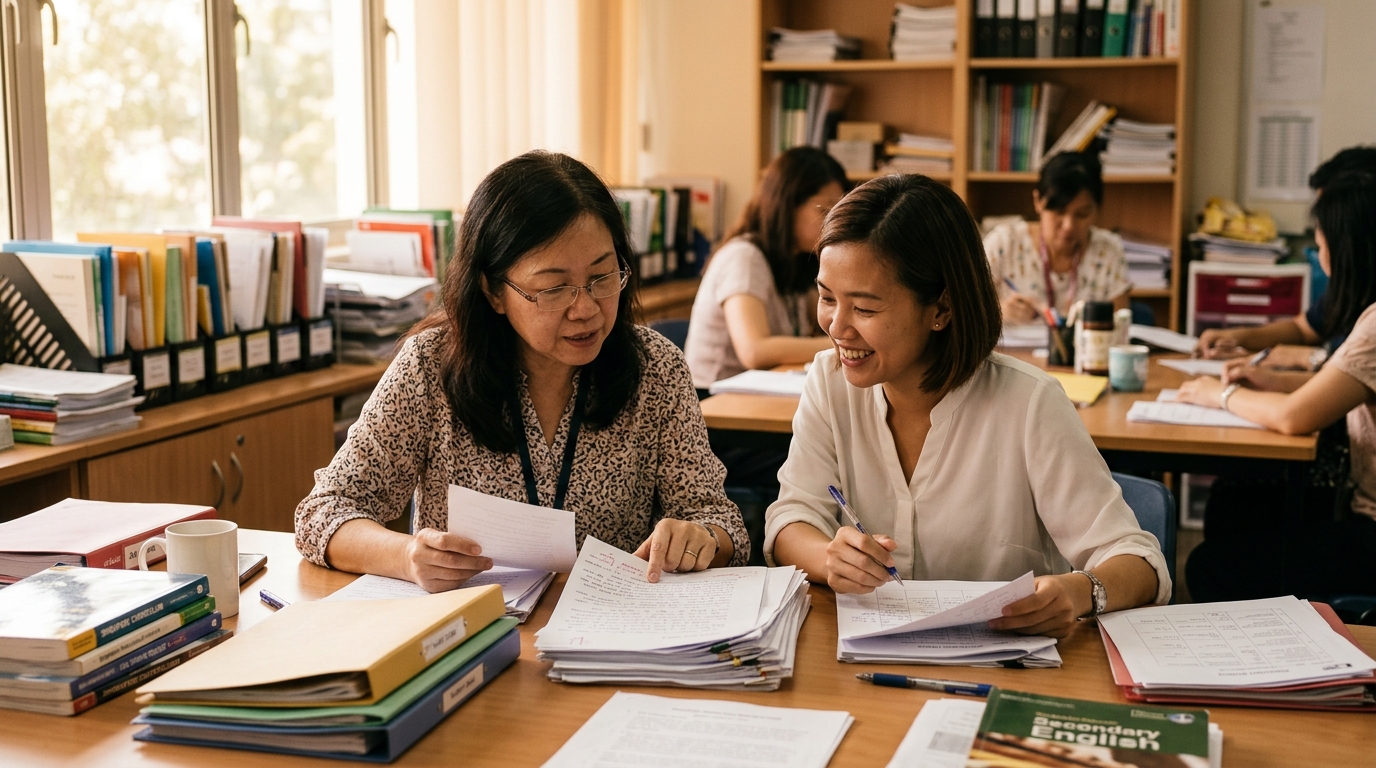
Second, Singapore invests heavily in teacher expertise. High-performing systems tend to take preparation and professional learning seriously, and Singapore is a classic example. Teachers are developed as professionals who understand both content and pedagogy. That matters in literacy because adolescent reading improvement rarely comes from a single intervention block alone. It depends on English teachers who can teach close reading and writing well, but also on science, history, and career-technical teachers who know how to support disciplinary literacy.
Third, Singapore pays attention to language development across subjects. Students are expected to read for meaning, discuss ideas precisely, and express themselves clearly. That sounds obvious, but in many secondary schools literacy still gets siloed: the English department is seen as responsible, while the rest of the building focuses on coverage. Stronger systems understand that reading is not a generic skill students either have or do not have. Reading in biology, algebra, civics, and literature asks for different kinds of thinking.
Why this is especially relevant for U.S. grades 6–12
By secondary school, literacy challenges become harder to ignore and harder to address. Students may read haltingly, avoid complex text, struggle to infer meaning, or lack the academic vocabulary needed to access grade-level work. Others can decode but cannot synthesize information, evaluate sources, or write coherent arguments. Teachers face the impossible-seeming task of remediating years of missed learning while also preparing students for graduation, college, work, and civic life.
This is where the American conversation sometimes goes wrong. We look for silver bullets: a program, a screening tool, a tutoring app, a writing initiative. Those tools can help, but adolescent literacy improvement is usually a systems problem. If a 9th grader cannot independently read a history chapter, that is not only an English department issue. It is a scheduling issue, a curriculum issue, a professional learning issue, and often a staffing issue.
The pressure on schools is real. Many districts are coping with chronic absenteeism, shortages of reading specialists, multilingual learner needs, and large class sizes. Secondary teachers often have limited planning time, and many were trained deeply in content but not in how to teach struggling readers within that content. Any serious literacy strategy has to start by respecting those constraints.
Lessons the U.S. can borrow—without pretending we are Singapore
The most useful lesson from Singapore is not centralization for its own sake. It is coherence.
American secondary schools can improve literacy when they reduce fragmentation. That means fewer disconnected initiatives and more shared expectations for reading, discussion, vocabulary, and writing across grades and subjects. Students should encounter consistent routines: how to annotate a text, how to cite evidence, how to unpack academic language, how to revise a paragraph, how to discuss respectfully and precisely.
A second lesson is that literacy support must extend beyond intervention periods. Intervention matters, especially for students reading below grade level. But if literacy instruction disappears the moment students leave that support class, growth will be slow. Students need frequent access to grade-appropriate texts with scaffolds, not a steady diet of watered-down materials.
A third lesson is that teacher knowledge matters as much as materials. High-quality curriculum helps, but it cannot substitute for teachers who know how to model comprehension, build background knowledge, teach vocabulary in context, and guide discussion toward meaning. Countries that perform well on international measures generally do not treat teaching as script delivery. They build expertise over time.
What realistic improvement looks like in American schools
For U.S. middle and high schools, realistic progress will probably look less dramatic than political rhetoric suggests. It may mean a district chooses one strong reading and writing framework for grades 6–10 instead of six partial ones. It may mean every department identifies the text structures, vocabulary practices, and writing demands students need. It may mean adding a protected reading intervention course at the middle school level, then pairing that with content-class scaffolds rather than expecting intervention alone to close gaps.
It also means using data carefully. NAEP and state assessments can tell us there is a problem, but classroom improvement depends on more immediate evidence: student writing samples, fluency checks where appropriate, comprehension tasks, discussion quality, and course performance. Schools do not need more data points they cannot act on. They need usable information tied to instructional decisions.
Finally, improvement requires patience. Estonia, Finland, Singapore, and Canada did not build strong literacy outcomes through annual reinvention. They built capacity over time. American schools can do the same, but only if leaders protect focus long enough for teachers to get good at the work.
Five concrete steps schools can take now
Start with a cross-disciplinary literacy plan for grades 6–12. Keep it simple: shared routines for vocabulary, annotation, evidence-based writing, and academic discussion.
Audit the curriculum for text quality and coherence. If students are mostly reading fragments, slides, and worksheets, they are not getting enough practice with sustained comprehension.
Invest in professional learning for content-area teachers, not just English teachers. Science, social studies, and CTE teachers need practical strategies for supporting reading without turning every class into remedial English.
Create layered support for struggling readers. That may include intervention classes, high-impact tutoring, structured peer support, or strategic use of specialists. The key is to connect those supports to core classroom demands.
Protect time. Teachers need common planning time to align assignments, analyze student work, and avoid overwhelming students with inconsistent expectations.
Singapore’s literacy engine works because it is not really an engine at all. It is a steady commitment to coherence, expertise, and follow-through. American secondary schools do not need to copy Singapore wholesale. But they can learn from the basic truth underneath its success: literacy improves when a system makes it everybody’s responsibility—and then gives people the tools, time, and clarity to act like it.