Secondary schools are under pressure to improve reading, but the biggest obstacles are often not effort or intention. They are funding, staffing, and time—the basic conditions students and teachers need in order to make literacy growth possible.
For years, schools have been told to "raise literacy" as if the solution were mostly a matter of better slogans, tighter accountability, or one more program. But in grades 6-12, literacy improvement is rarely blocked by a lack of caring. More often, it is blocked by the daily realities of school life: too few staff, too little time, and budgets that do not match the scale of the challenge.
That challenge is real. According to the National Assessment of Educational Progress (NAEP), average reading scores for both 8th and 12th graders were lower in 2022 than in earlier years, continuing a troubling long-term pattern for many groups of students. Internationally, the OECD's PISA assessments have also shown persistent gaps in reading performance and equity across systems. These numbers matter not because they tell us everything, but because they confirm what many teachers already know: too many adolescents arrive in secondary classrooms still needing direct support with vocabulary, fluency, comprehension, and writing.
The problem is that middle and high schools were not designed primarily as literacy intervention systems. They were designed around subject specialization, schedules divided into short periods, and graduation requirements that leave little room for extra help. If we want better outcomes, we have to start by telling the truth about the barriers.
Secondary literacy is different from early reading
In elementary school, literacy often sits at the center of the day. In secondary school, it becomes everyone's responsibility and, in practice, can become no one's protected time. Students are expected to read science explanations, historical arguments, math word problems, technical directions, novels, primary sources, and digital texts—often all in the same week.
That means adolescent literacy is not just about decoding. It includes background knowledge, academic vocabulary, stamina, writing, discussion, and the ability to navigate discipline-specific texts. A 7th grader struggling with reading may also be trying to keep up in six or seven classes, each with different demands. A 10th-grade student may be able to chat confidently about a topic and still have difficulty unpacking a dense article or writing a clear evidence-based response.
This is why literacy improvement in secondary schools requires more than asking English teachers to work harder. It requires coordinated support across departments, and coordination takes resources.
Funding shapes what schools can actually do
It is easy to say schools should intervene early, provide tutoring, buy high-quality materials, and train staff. It is much harder to do those things consistently without stable funding.
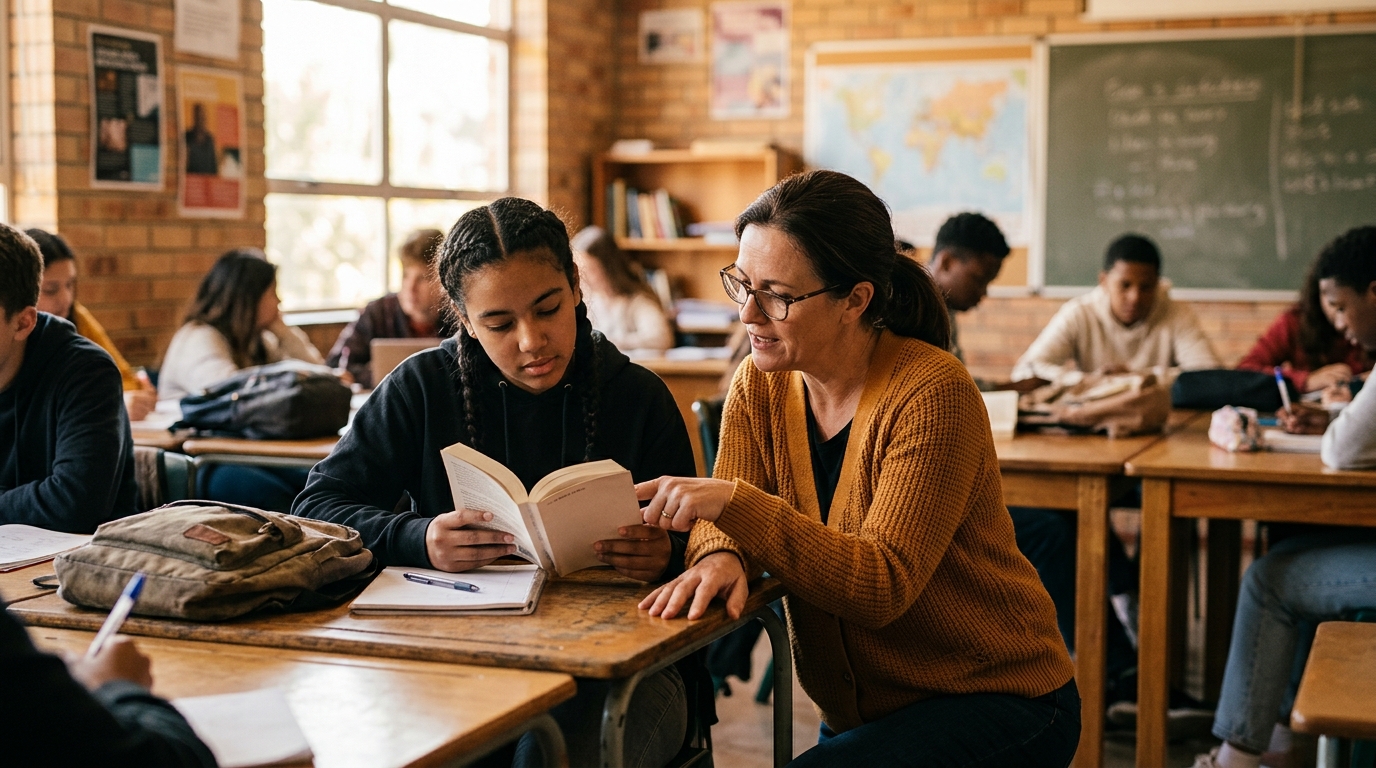
Secondary literacy support is expensive because it is labor-intensive. Students who are significantly behind often need small-group instruction, diagnostic assessment, targeted materials, and repeated opportunities to practice with feedback. Schools may need reading specialists, intervention teachers, bilingual staff, special education support, and up-to-date classroom libraries that reflect students' interests and identities. None of that is free.
Funding also affects class size, access to electives, and scheduling flexibility. When budgets are tight, intervention periods are often cut first or absorbed into general staffing needs. A school may want to offer an extra reading course for 9th graders who need it, but doing so can mean hiring another teacher or reducing other course options. Leaders are forced into impossible tradeoffs.
And because school funding in the United States remains uneven, literacy support is often least available where needs are greatest. That is not a failure of commitment. It is a structural problem.
Staffing shortages make improvement fragile
Even when a district has a strong literacy plan, it still needs people to carry it out. Across the country, schools have struggled with staffing shortages, especially in high-need areas. When positions go unfilled, the burden falls on existing teachers, interventionists, and support staff.
In secondary settings, the staffing challenge is especially sharp because content teachers are being asked to do more. A history teacher may be expected to teach sourcing, annotation, vocabulary, and analytical writing while also covering standards, preparing students for state assessments, and managing large classes. A science teacher may know that students need explicit help reading informational text but may not have had much training in how to provide it.
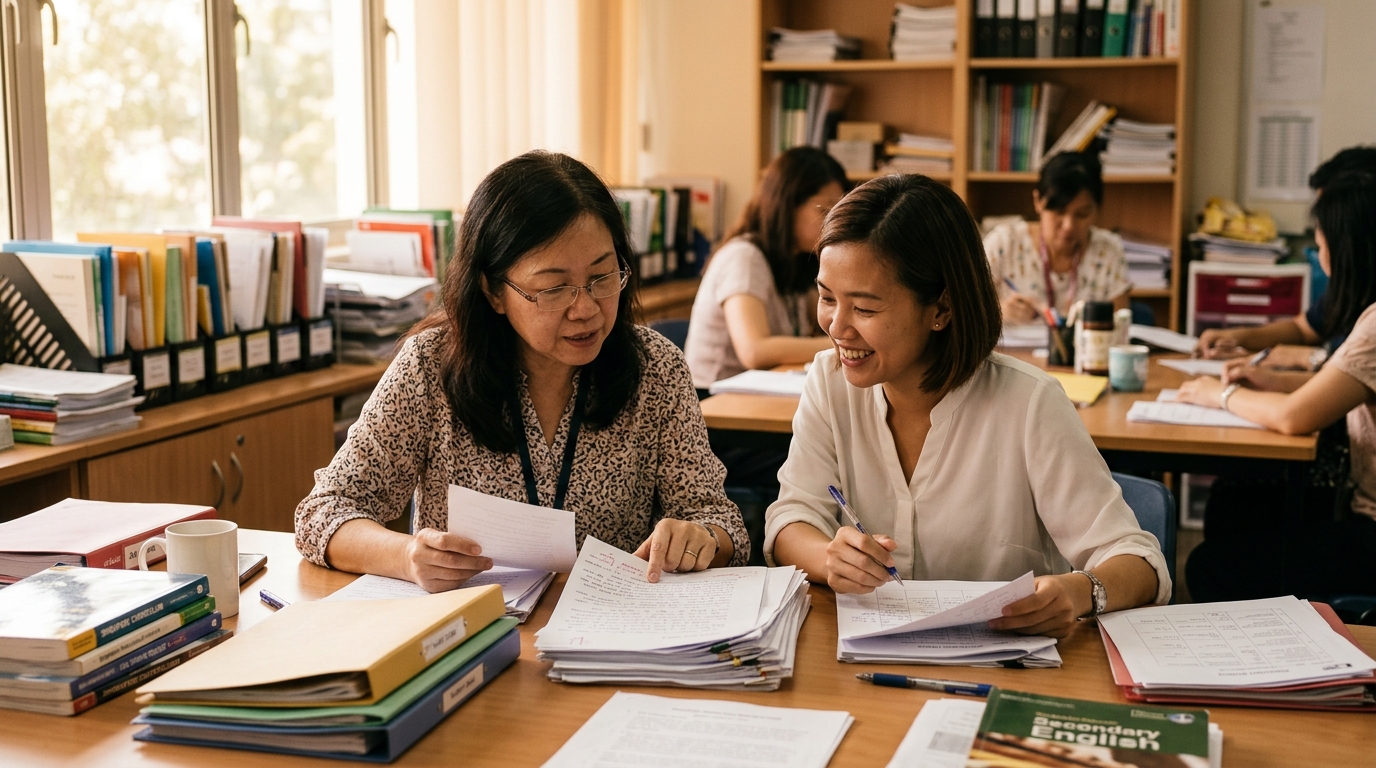
Professional learning can help, but it cannot substitute for capacity. One workshop will not create a whole-school literacy system. Schools need instructional coaches, reading specialists, collaborative planning structures, and enough staffing to let teachers implement what they learn.
There is also the issue of turnover. Literacy improvement depends on consistency over time. If a school loses trained staff every year, momentum resets. Relationships reset too. Students who most need support are often the ones most affected by instability.
Time may be the scarcest resource of all
If funding is the engine and staffing is the people, time is the space where literacy work actually happens.
Secondary teachers operate inside packed schedules. Class periods may be 45 or 50 minutes. Students move from room to room. Teachers juggle grading, parent communication, lesson planning, and intervention documentation, often with limited common planning time. In that environment, building reading volume, vocabulary knowledge, and writing fluency is difficult.
Students face time pressures too. Some have jobs, care for siblings, participate in athletics, or manage long commutes. Others are still learning English or recovering from interrupted schooling. Telling adolescents to "just read more" without creating supported time during the school day ignores reality.
High-performing systems offer a useful reminder here. Countries such as Finland, Estonia, Singapore, and parts of Canada are often discussed because of their strong outcomes on international assessments like PISA. Their contexts differ from the United States, and simple copying does not work. But one lesson is consistent: strong systems tend to invest in teacher preparation, coherent curriculum, and intervention structures rather than relying on heroics. Improvement is built into the design, not squeezed into leftovers.
What teachers are up against in real classrooms
A secondary teacher may have 150 students. Some read far above grade level; others may still need support with foundational skills. Some students are highly engaged readers outside school; others have had years of frustration and avoidance. Add attendance issues, device distractions, mental health needs, and pressure to cover content, and the literacy task becomes even more complex.
This is why blaming teachers is both unfair and unhelpful. Most teachers already adapt texts, preteach vocabulary, confer with students, model annotation, reteach writing skills, and try to keep reading meaningful. But good teaching cannot fully overcome systemic shortages. If students need more individual feedback than one adult can reasonably provide, that is not a motivation problem. It is a staffing and design problem.
Realistic strategies that can help now
Schools do not need magic answers. They need practical steps that respect constraints.
First, protect dedicated literacy time in grades 6-12. That might mean an intervention block, a reading lab, advisory-based reading support, or a double-dose class for students with the greatest needs. If literacy is important, it needs a place in the schedule.
Second, invest in disciplinary literacy across subjects. English teachers matter enormously, but literacy growth also happens when science, social studies, and career and technical education teachers explicitly teach how reading and writing work in their fields. This should come with usable curriculum supports, not just expectations.
Third, prioritize staffing that multiplies teacher capacity. Reading specialists, instructional coaches, intervention teachers, multilingual learner staff, and trained paraprofessionals can make a measurable difference because they increase the amount of targeted support students receive.
Fourth, use high-quality data carefully. NAEP can show the national picture, but schools also need local evidence: course performance, attendance, formative assessments, student writing, and reading diagnostics. The goal is not more testing for its own sake. The goal is knowing which students need what kind of help.
Fifth, choose fewer initiatives and implement them well. Schools often exhaust staff by layering program on top of program. A coherent approach—strong curriculum, common routines for vocabulary and text discussion, targeted intervention, and time for collaboration—is usually more sustainable than constant reinvention.
Finally, make reading matter to adolescents. That means access to engaging texts, opportunities for choice, strong school libraries, culturally relevant materials, and classroom conversations where students can connect reading to identity, community, and the wider world. Motivation is not separate from achievement; it is part of it.
Raising literacy rates in secondary education is possible. But it will not happen through pressure alone. It will happen when schools have the funding to build systems, the staffing to deliver support, and the time to let good instruction take root. If we want better reading outcomes for young people, we have to stop treating literacy as a wish and start treating it as a condition we are willing to resource.