For adolescents with dyslexia, whole-class instruction often moves too fast and intervention can feel isolating. A well-planned small-group rotation gives secondary students more decoding, fluency, vocabulary, and writing support without pulling them out of the life of the classroom.
Middle and high school teachers know the tension well: the curriculum keeps moving, but some students are still working hard just to read the page. For teens with dyslexia, that gap can widen quickly in secondary school, where every subject depends on increasingly complex text, faster reading, and more independent note-taking.
This is not a small issue. According to the 2024 National Assessment of Educational Progress, average reading scores for both 4th and 8th graders in the United States remain below pre-pandemic levels, and only about 30 percent of 8th graders performed at or above NAEP Proficient in reading. NAEP is not a diagnosis tool, and it does not tell us how many students have dyslexia. But it does remind us that many adolescents are struggling with reading, including students whose word-level difficulties were never fully addressed in the early grades.
Secondary schools are also working within real constraints: larger class sizes, tighter schedules, fewer interventionists, and content teachers who were not trained as reading specialists. That is why the most useful solutions are often the ones that can fit inside the school day and inside the classroom. One of those solutions is a small-group rotation model.
Why dyslexic teens need something different
Dyslexia does not disappear in adolescence. Older students may become better at masking it, but they still often need explicit practice in decoding, spelling patterns, morphology, fluency, and comprehension. In secondary settings, the challenge becomes more complex because students are expected to learn biology, history, literature, and algebra at the same time they are trying to strengthen foundational literacy skills.
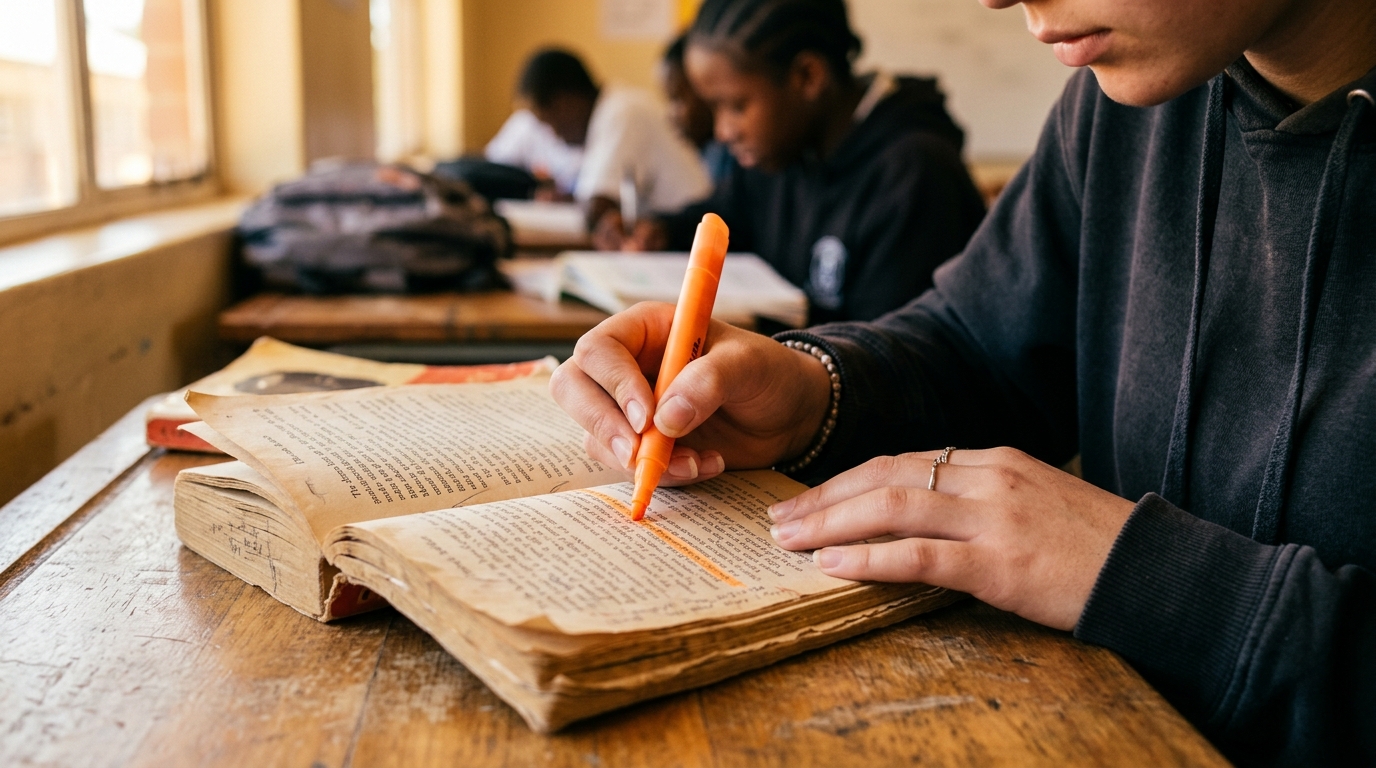
A teenager with dyslexia may understand ideas well in discussion but struggle to read a chapter independently. They may have strong verbal knowledge and weak spelling. They may write thoughtful responses orally and produce very little on paper. When every class relies on silent reading and quick written output, these students can look disengaged when they are actually overloaded.
That is why a one-size-fits-all intervention block often falls short. Teens need instruction that is targeted, dignified, and connected to grade-level learning.
What the small-group rotation looks like
In a secondary classroom, a small-group rotation is not an elementary-style carousel with bells and bins. It is a structured way to divide class time so the teacher can deliver focused support to a few students while the rest of the class is engaged in purposeful, independent or collaborative work.
A typical 50- to 60-minute period might include:
- a short whole-class launch with the day’s essential text, vocabulary, or writing goal
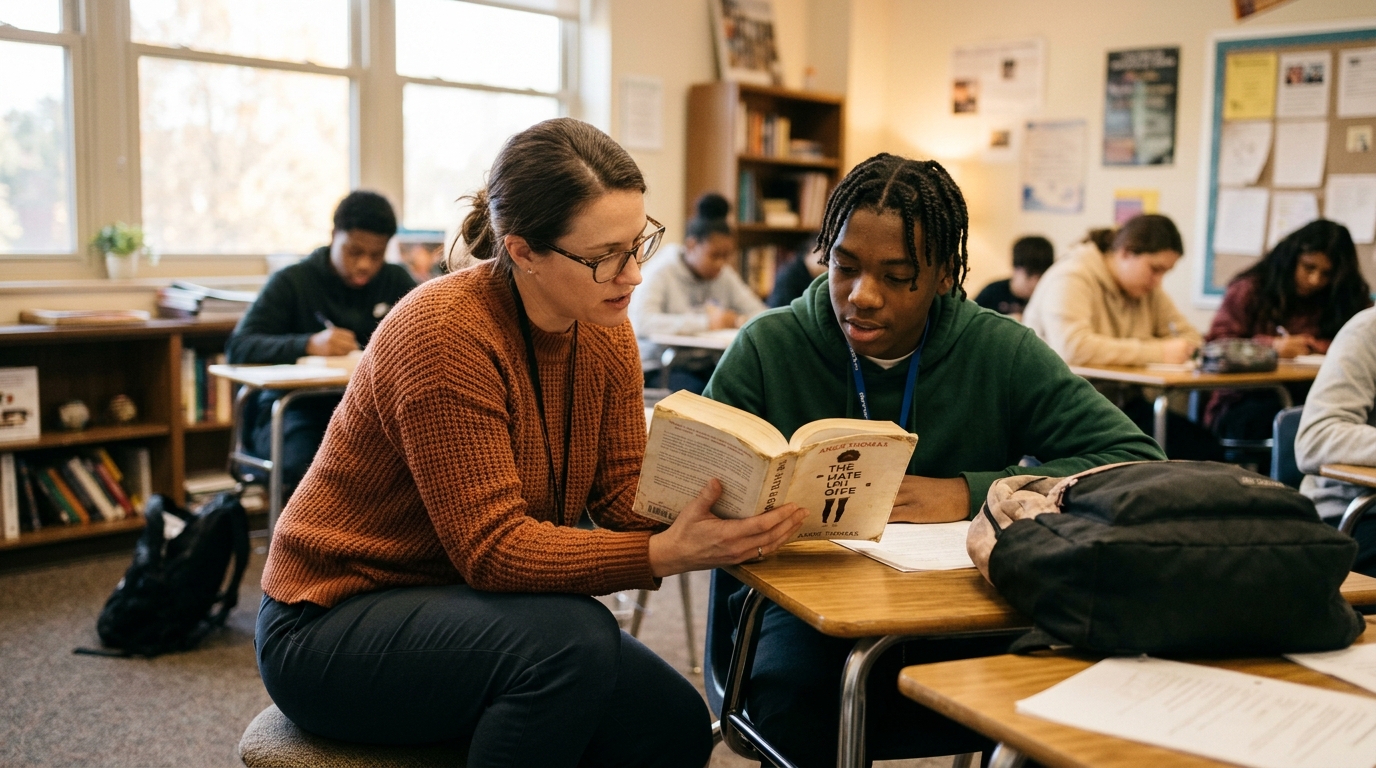
- one teacher-led small group focused on a specific reading need
- one peer or partner task tied to comprehension or discussion
- one independent station for annotation, guided practice, audio-supported reading, or short writing
- a brief closing check for understanding
The key is that the groups are flexible and skill-based, not fixed labels. A student might join the teacher group for multisyllabic decoding and morphology on Monday, then move to a fluency-and-comprehension group later in the week.
For dyslexic students, this matters. It creates protected time for explicit instruction without removing them from grade-level content all the time. It also prevents the common secondary pattern in which students either sink in whole-class instruction or get pulled out so often that they miss the very knowledge their peers are building.
What happens in the teacher-led group
The strongest small-group rotation is not just “extra help.” It is planned, explicit teaching based on what students actually need.
For dyslexic adolescents, teacher-led group work often includes:
- advanced phonics and decoding of multisyllabic words
- morphology, including prefixes, suffixes, and Greek or Latin roots
- repeated reading for fluency with feedback
- sentence-level work to support syntax and written expression
- pre-teaching vocabulary from upcoming content texts
- guided reading of a challenging passage with chunking and annotation
This kind of instruction is especially important in secondary school because older students encounter more domain-specific language. A student who cannot efficiently break apart words like “photosynthesis,” “constitutional,” or “irreversible” will struggle across subjects.
Internationally, higher-performing systems such as Estonia, Singapore, Canada, and Finland are often noted for strong literacy outcomes on PISA, the Programme for International Student Assessment run by the OECD. Their systems differ in many ways, but one shared lesson is that literacy is treated as everybody’s business, not only the job of the elementary classroom. Secondary students continue to receive structured support when needed, and reading is not assumed to be “already learned.”
Why rotation works in secondary classrooms
The appeal of small-group rotation is practical as much as instructional.
First, it makes differentiation possible without requiring five separate lesson plans. Teachers can keep a shared text or shared task at the center while adjusting support during small-group time.
Second, it protects student dignity. Adolescents are acutely aware of stigma. A rotation model normalizes movement and varied tasks, so students with dyslexia are not singled out as the only ones getting extra instruction.
Third, it uses limited staffing more effectively. Not every school can add a reading specialist to every grade level. But many departments can build one or two weekly rotation days into ELA, intervention, humanities, or even content-area literacy blocks.
Fourth, it improves attention and engagement. Long stretches of whole-class reading can be punishing for struggling readers. Shorter, more active segments help students sustain effort.
The challenges schools have to plan for
Of course, no model works by magic. Small-group rotation can fail if it becomes busywork at the stations and triage at the teacher table.
Teachers need usable screening and progress-monitoring information. In secondary settings, that may include fluency checks, spelling inventories, writing samples, and diagnostics that identify whether the issue is decoding, language comprehension, or both. Without this, groups can become too broad to be effective.
Time is another obstacle. In many middle and high schools, periods are short and pacing guides are crowded. Schools may need to protect one or two days each week for deeper workshop-style instruction rather than trying to rotate every day.
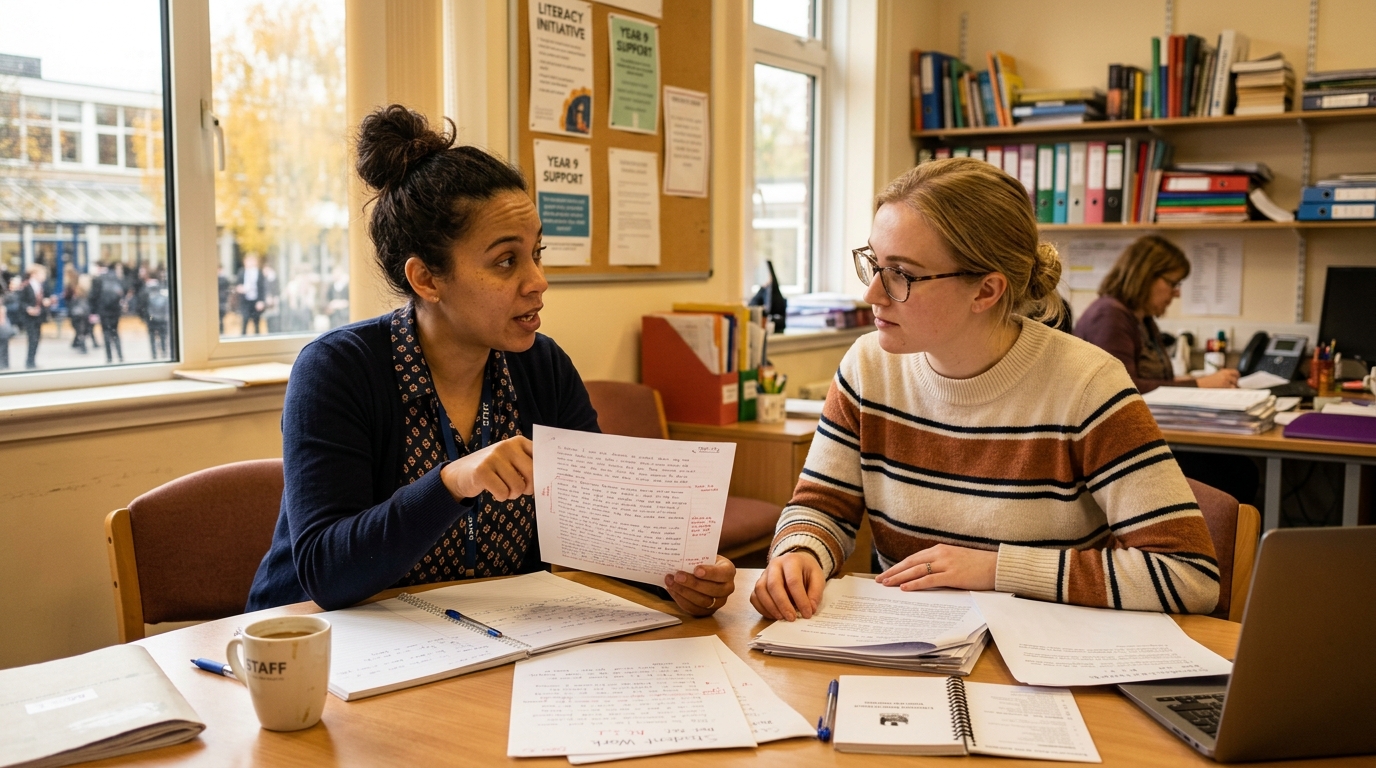
Professional learning matters too. Many secondary teachers are content experts who were not prepared to teach word-level reading skills. That is not a failure on their part; it is a training gap in the system. Schools that want better literacy outcomes have to invest in practical training on adolescent reading development, dyslexia, morphology, fluency, and writing support.
How to make it realistic
Schools do not need a perfect model to begin. They need a manageable one.
Start with one course or one grade level. An ELA team in grade 7 or grade 9 might pilot rotations twice a week for one quarter. Keep the structure simple: whole-class mini-lesson, 15-minute teacher group, 15-minute partner task, 15-minute independent task, exit ticket.
Use common texts, but vary the support. All students can work with the same article, chapter, or primary source while teacher groups adjust the entry point: vocabulary preview, chunked reading, oral rehearsal, or sentence frames.
Build routines before complexity. Students need to know what independent work looks like, how to transition, where materials are, and how to get help without stopping the teacher-led group.
Lean on audio, but do not stop at audio. Text-to-speech, audiobooks, and teacher-recorded directions are powerful supports for dyslexic teens. They increase access to grade-level content. But students also still need direct teaching that improves their own reading skills.
Coordinate across departments. Science and social studies teachers can reinforce morphology and disciplinary vocabulary. Special educators, reading specialists, and general educators should share a short list of target skills and accommodations so students are not navigating a different system in every room.
Finally, measure whether it is helping. Look for growth in reading accuracy, fluency, writing output, and willingness to engage with text. Just as importantly, ask students what is making reading more manageable. Teenagers often know which supports preserve independence and which ones merely hide the problem.
A smarter way to help students keep up
Dyslexic adolescents do not need lower expectations. They need better access, stronger instruction, and a schedule that makes room for both intervention and belonging. A small-group rotation is not a cure-all, but it is one of the more realistic ways secondary schools can respond to literacy needs without waiting for ideal staffing or extra periods that may never come.
When it is done well, this approach sends an important message: reading support is not remediation for a few students on the margins. It is part of how a serious secondary school helps young people learn. And for teens with dyslexia, that can mean the difference between spending another year trying to hide and finally getting the instruction they need to keep up.
Enjoyed this? Get the next articles straight to your inbox — join the free newsletter at https://juliusmason.com/blog. Practical reads, no spam, unsubscribe anytime.