In crowded secondary classrooms, paraeducators can be a practical force for stronger reading support when their role is clear, targeted, and well coordinated with teachers. Here’s how schools can use paraprofessionals to build adolescent literacy without pretending resources are unlimited.
Why this matters now
Secondary schools are being asked to solve a literacy challenge that did not begin in middle or high school. Many students arrive in grades 6–12 still needing support with fluency, vocabulary, background knowledge, comprehension, and the stamina required for academic reading across subjects. Teachers know this well. They also know the reality: class sizes are large, schedules are tight, intervention periods are limited, and staffing shortages are real.
The urgency is not imagined. On the 2022 National Assessment of Educational Progress, often called the Nation’s Report Card, average reading scores fell for both fourth and eighth graders, and just 31% of eighth graders performed at or above NAEP Proficient in reading. That does not mean 69% “can’t read.” It does mean far too many adolescents are not yet reading at the level schools expect for demanding coursework. For secondary educators, that gap shows up everywhere: in science labs, social studies documents, word problems, career and technical texts, and the quiet avoidance that grows when reading feels risky.
Paraeducators cannot fix this alone. But in big classes, they can make effective reading support more possible.
The secondary literacy problem is different
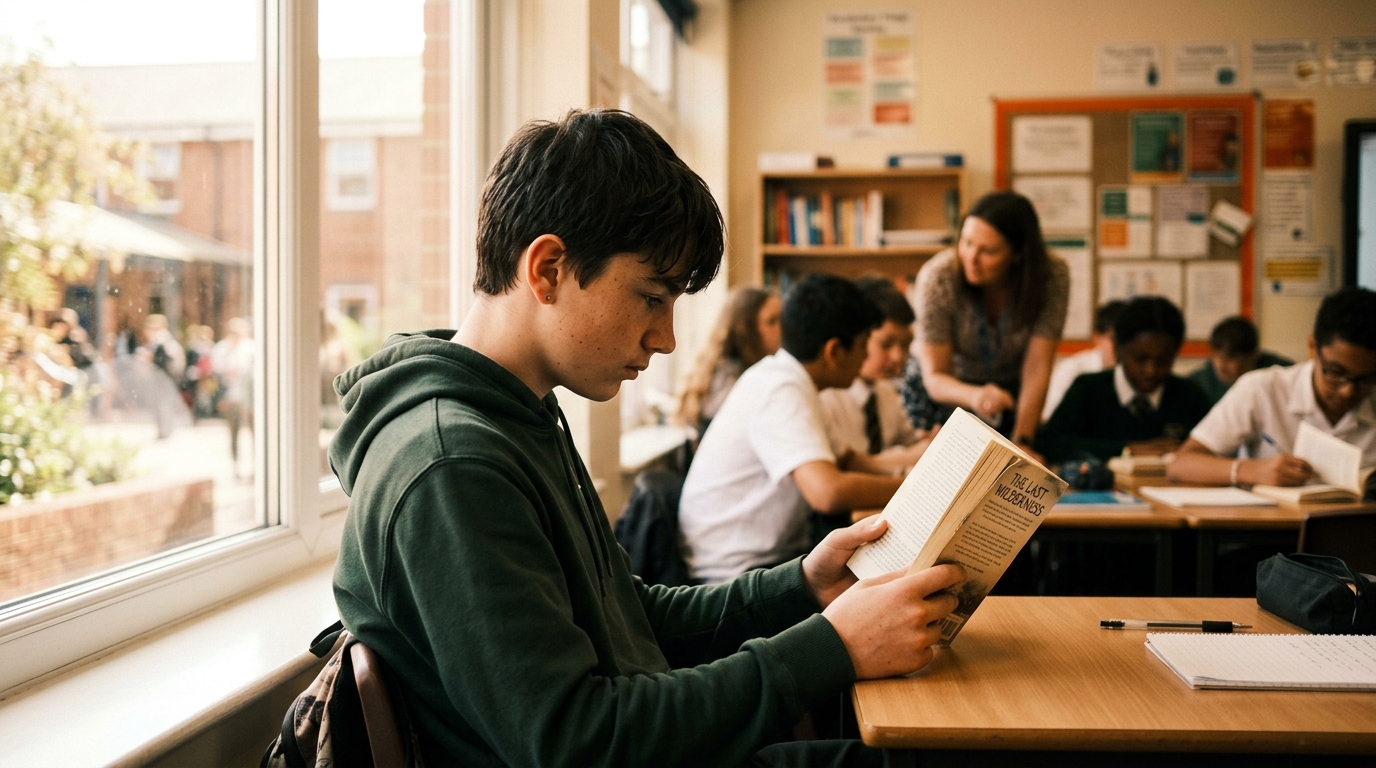
Reading support for adolescents is not simply elementary intervention moved up the building. Students in grades 6–12 face longer, denser, more specialized texts. They are expected to infer, compare sources, track arguments, interpret evidence, and read independently in every subject. Motivation and identity matter more too. Teenagers are acutely aware of who gets pulled for help and who does not.
That is why paraeducator support in secondary settings has to be carefully designed. If the role becomes “sit next to struggling kids and help when they get stuck,” schools often get inconsistency instead of acceleration. Students may become dependent, teachers may not have time to plan with support staff, and paras may be asked to improvise without enough training.
A better model treats paraeducators as part of a literacy system, not as emergency coverage.
What paraeducators can do well
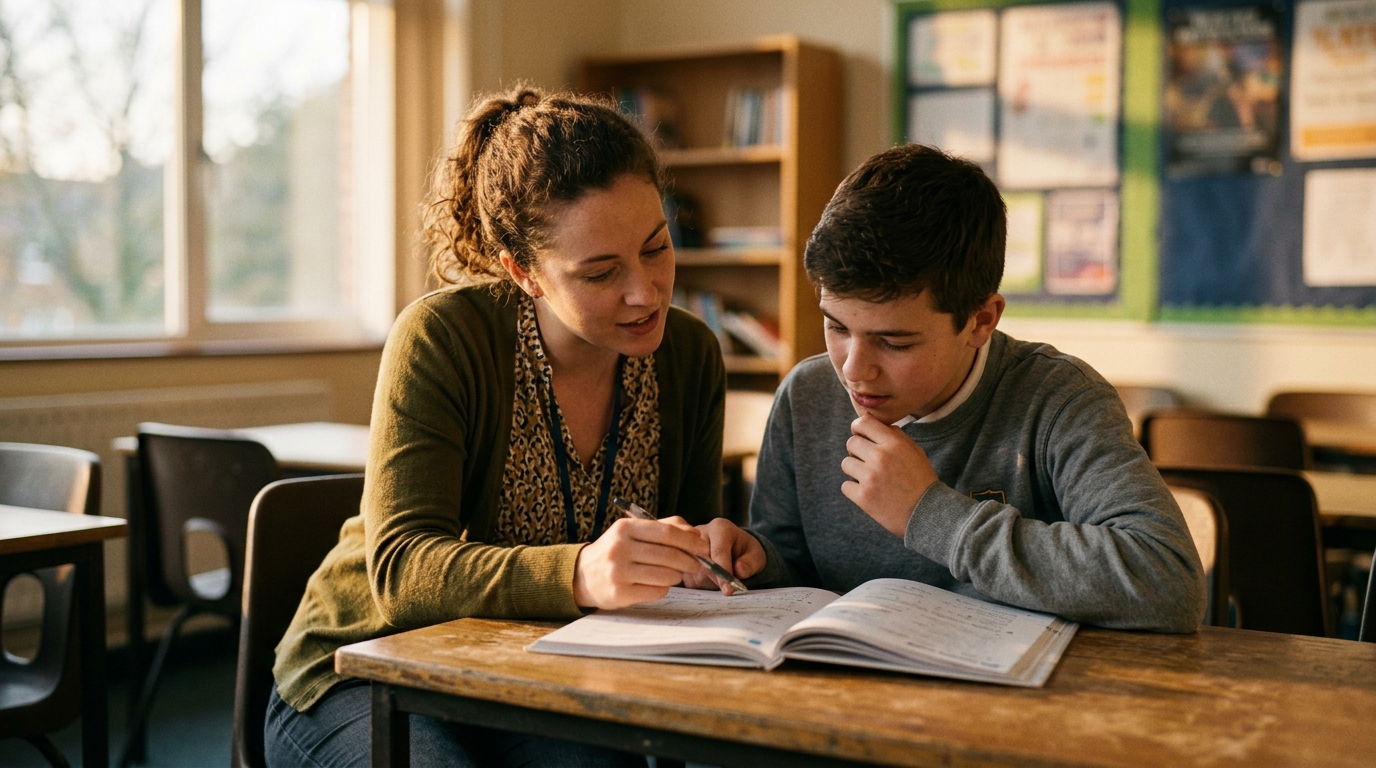
When schools define the job clearly, paraeducators can contribute in high-impact ways. They can lead short routines that build fluency, support guided practice with vocabulary, monitor comprehension during partner or small-group work, and help students rehearse annotation or note-taking strategies. They can also provide the extra repetitions many adolescents need but rarely get in a large class.
The key is that paraeducators are most effective when the task is structured. Instead of “help them with the chapter,” they need specific protocols: listen for decoding breakdowns, prompt a reread, ask one of three comprehension questions, or record which vocabulary terms students can use correctly in discussion.
This is especially important in secondary schools, where texts vary across disciplines. A paraeducator supporting a history class may help students source a document and identify claim and evidence. In science, the same paraeducator may help students unpack technical vocabulary and read a lab procedure in sequence. In English, they may support close reading or discussion prep. The adult support matters, but the routine matters even more.
Enseignements tirés de systèmes plus performants
High-performing education systems do not offer a simple importable solution, but they do offer clues. Countries such as Estonia, Singapore, Canada, and Finland have earned sustained attention through international measures like PISA for strong literacy outcomes. Their contexts differ from the United States, and schools should be wary of copying slogans. Still, common themes appear: coherent curriculum, strong teacher preparation, early support before gaps widen, and school structures that make intervention routine rather than ad hoc.
That last point matters for paraeducator use. In effective systems, support staff tend to work within a planned instructional approach instead of hovering at the margins. The lesson for US secondary schools is not that they need more complexity. It is that they need more alignment. If paraeducators are helping with reading, they should be reinforcing the same vocabulary routines, comprehension strategies, and text structures that teachers are already using.
Common mistakes schools make
One common mistake is assigning paraeducators to the students with the greatest need but giving them the least guidance. Good intentions can produce weak practice when support staff receive little training in adolescent literacy.
Another mistake is overreliance on one-to-one proximity. Constant adult presence may keep a student compliant, but it does not always build independence. In fact, some secondary students become more passive when an adult is always there to rescue them.
A third mistake is using paras mainly for task completion instead of reading development. It may feel efficient to have a para help students finish the worksheet, but if the student never gets better at reading the text itself, the problem returns tomorrow.
Finally, schools often under-plan collaboration time. Even a skilled paraeducator cannot align support to the lesson if they get directions in the doorway as students walk in.
A practical playbook for big classes
Here is the good news: schools do not need a perfect staffing model to make paraeducator support more effective. They need a manageable one.
First, give paraeducators a narrow, repeatable set of literacy routines. Think five to seven high-use practices: preview key vocabulary, chunk a text, prompt annotation, run repeated reading for fluency, check gist after each section, guide evidence finding, and use exit tickets to record misunderstanding. Repetition builds staff confidence and student familiarity.
Second, match paraeducator support to the part of reading students actually struggle with. If students can decode but cannot summarize, the support should focus on comprehension and language. If fluency is weak, use short oral reading routines with immediate feedback. If academic vocabulary is the barrier, preteach the terms that unlock the whole lesson.
Third, use small groups whenever possible. In a large secondary classroom, one paraeducator can often create more impact with a rotating group of three to six students than with one student all period. Small groups normalize support and multiply practice opportunities.
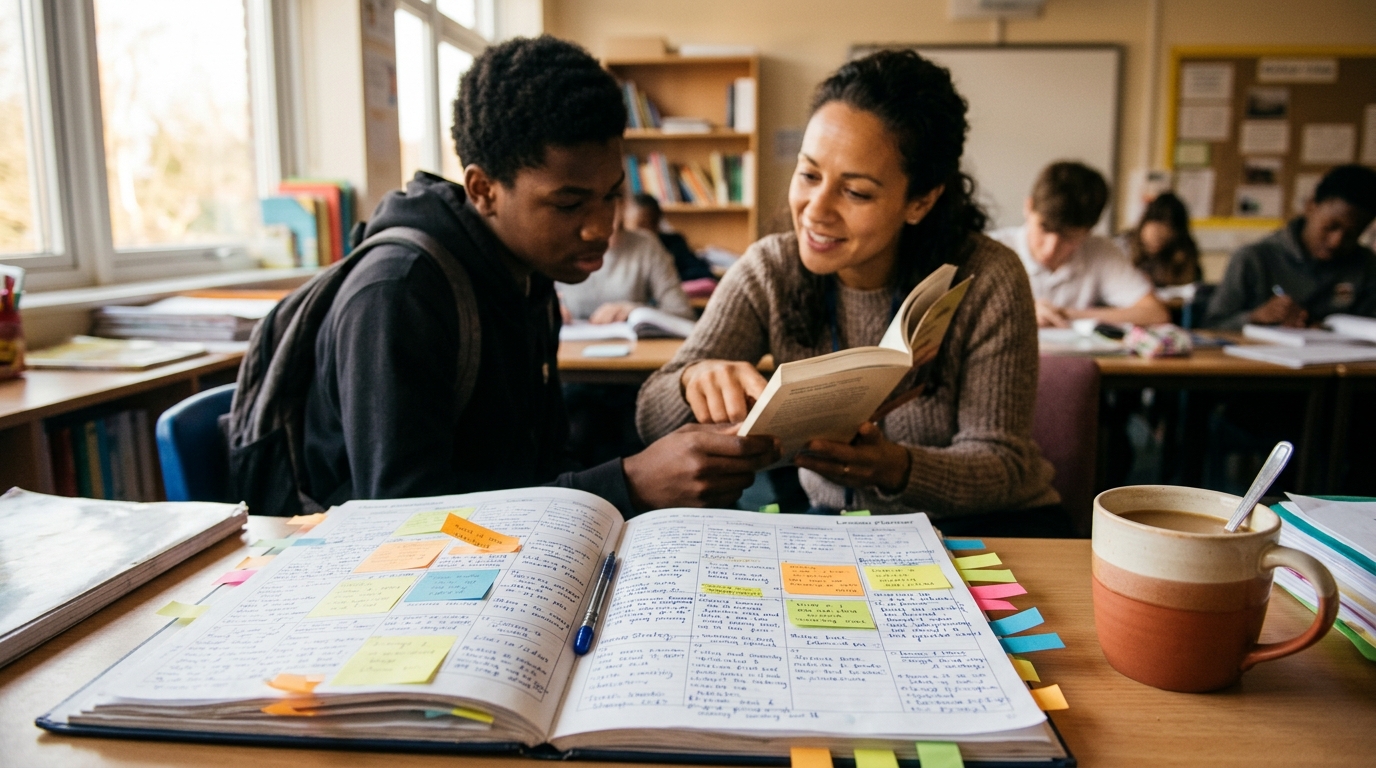
Fourth, build in a two-minute briefing and debriefing system when longer planning time is impossible. Before class: what is today’s reading goal, which students need attention, and what exact routine should the para run? After class: who struggled, what errors showed up, and what should happen next? Not every school can create ideal common planning time, but almost every school can improve the handoff.
Fifth, protect student dignity. Adolescents read better when support does not feel like public sorting. Paras can circulate, confer quietly, lead mixed-readiness groups, or support all students during demanding text work. The goal is access, not labeling.
Ce que les chefs d'établissement peuvent faire
School leaders set the conditions. If paraeducators are expected to support literacy, they need basic training in adolescent reading development, discipline-specific literacy, prompting techniques, and when to step back so students do the cognitive work themselves. They also need access to the materials teachers are using, not a mystery role built on guesswork.
Leaders can also help by scheduling paraeducators where the reading demand is greatest, not only where supervision is hardest. In many middle and high schools, that means prioritizing gateway courses, ninth-grade supports, and classrooms with especially text-heavy instruction.
And leaders should measure the right things. The question is not whether the paraeducator stayed busy. The question is whether students read more successfully, participated more independently, and showed growth on classroom evidence over time.
Une voie réaliste pour aller de l'avant
No one in secondary education needs another speech that ignores constraints. Big classes are real. So are absences, limited budgets, and the fact that teachers are already carrying too much. But that is exactly why paraeducator support must be purposeful.
If schools want better literacy outcomes, they should stop treating paras as general helpers and start treating them as trained partners in a simple, shared reading plan. Keep the routines consistent. Focus on the reading moves that matter most. Give support staff quick coaching, usable materials, and a clear lane. Then revisit what is working.
Adolescent literacy improves when students get more guided practice with real texts, more feedback, and more chances to succeed without embarrassment. In a big secondary classroom, paraeducators can help create those chances. Not as a miracle cure, but as part of a smarter, more humane system.