Many secondary schools have strong core instruction and intensive intervention, but too little in between. Tier 2 reading support for grades 6–10 can be the practical bridge that helps struggling adolescents catch up before gaps become permanent.
The gap between whole-class teaching and crisis intervention
In many middle and high schools, literacy support has two clear homes. There is Tier 1: the instruction every student receives in English, history, science, and other classes. And there is Tier 3: the most intensive intervention for students with the greatest needs, often through special education or highly targeted reading support.
What is often missing is the middle.
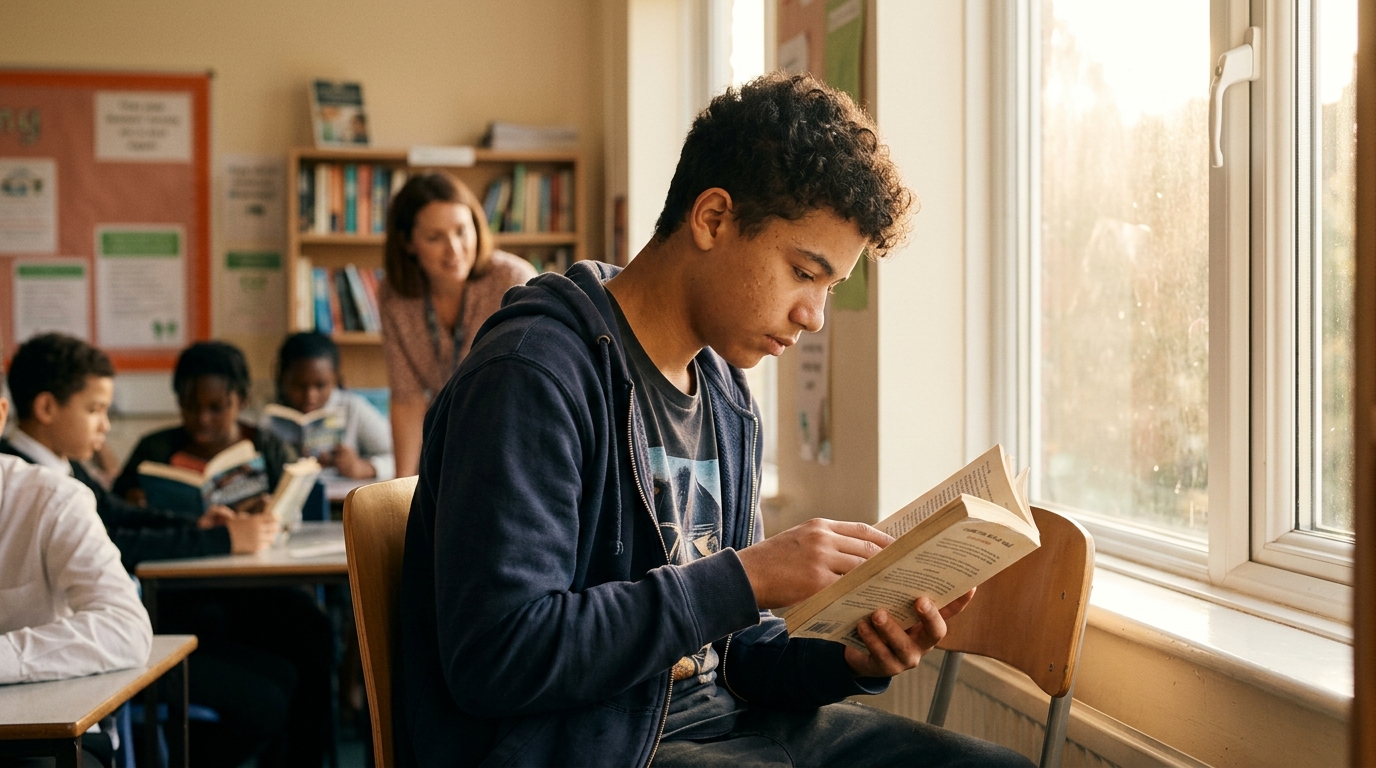
Tier 2 support in grades 6–10 should be the bridge for students who are not reading proficiently but are not receiving the most intensive services. These are students who can decode some text but read too slowly, miss key meanings, struggle with academic vocabulary, or fall apart when a text becomes dense and unfamiliar. In secondary schools, they can look "fine" until the curriculum asks them to read a primary source, a science explanation, or a multi-step word problem independently.
This is not a small problem. According to the 2022 National Assessment of Educational Progress, only 31% of eighth graders performed at or above Proficient in reading nationwide. The same assessment showed continued uneven outcomes by income, race, disability status, and multilingual status. By high school, the consequences are academic, social, and emotional: students read less, avoid harder courses, and often internalize the idea that they are simply "not readers."
Secondary educators know this already. They see students who can participate in discussion but cannot sustain comprehension alone. They see students who need support, but not a full replacement program. And they see this while managing packed schedules, large class sizes, staff shortages, and pressure to cover course content.
What Tier 2 should mean in grades 6–10
Tier 2 is not just "more of the same" and it is not a watered-down English class. In a strong multi-tiered system of support, Tier 2 is additional, targeted instruction for students whose screening and classroom performance show that Tier 1 is not enough.
In secondary settings, that usually means small-group support several times a week, focused on a specific set of reading needs. The exact focus will vary. Some students need fluency practice because slow, effortful reading blocks comprehension. Some need explicit work in morphology, vocabulary, and sentence structure. Some need direct instruction in comprehension routines such as summarizing, monitoring meaning, and connecting ideas across paragraphs. Many need all of these, but not all at once and not forever.
The key is precision. A ninth grader who reads accurately but cannot make sense of textbook language needs a different plan from a sixth grader still struggling with multisyllabic words. Secondary schools often skip this step because diagnostics take time and staffing. But without it, intervention turns into generic help, and generic help rarely closes gaps.
Why secondary schools struggle to build the middle
Part of the challenge is structural. Elementary schools are more likely to have dedicated reading blocks, schoolwide intervention systems, and staff whose roles are built around foundational literacy. Secondary schools were designed differently. Schedules are divided into periods. Teachers are organized by subject. Credit requirements compete with intervention time. It is genuinely hard to fit an extra reading class into a student’s day without displacing electives, language study, or career pathways.
There is also a belief problem. Some schools still assume that if students have reached middle or high school, reading difficulties are either fixed or no longer teachable. That is not supported by what we know. Adolescent literacy can improve with explicit instruction, practice, and feedback. The work may be slower than many educators wish, and the gains may not look dramatic overnight, but growth is possible.
Another obstacle is role confusion. Content teachers are rightly told that literacy is everyone’s responsibility. That is true. But it does not mean every teacher should be expected to deliver specialized reading intervention on top of everything else. A science teacher can support vocabulary, text structure, and discussion of evidence. That is not the same as diagnosing a student’s fluency or designing a targeted small-group intervention sequence.
When schools blur that line, everyone ends up overloaded and students get inconsistent support.
What stronger systems do differently
High-performing systems internationally do not offer a single simple model that the United States can copy. Context matters. But some patterns are instructive.
PISA, administered by the OECD, has consistently shown stronger reading performance in systems such as Estonia, Canada, and Singapore. These systems differ from one another, but they share some broad habits: attention to early identification, coherent curriculum, strong teacher preparation, and intervention that does not wait for failure to harden.
That lesson matters for secondary schools in the US. By grades 6–10, the students who need Tier 2 support have often needed it for years. If schools wait until a student fails multiple classes or becomes eligible for a more intensive placement, they have waited too long.
The practical takeaway is not to import another country’s timetable or textbook. It is to build consistent routines: universal screening where possible, common decision rules, protected intervention time, and progress monitoring that leads to action rather than paperwork.
What effective Tier 2 support looks like in practice
The strongest secondary Tier 2 models are focused, scheduled, and short-cycle.
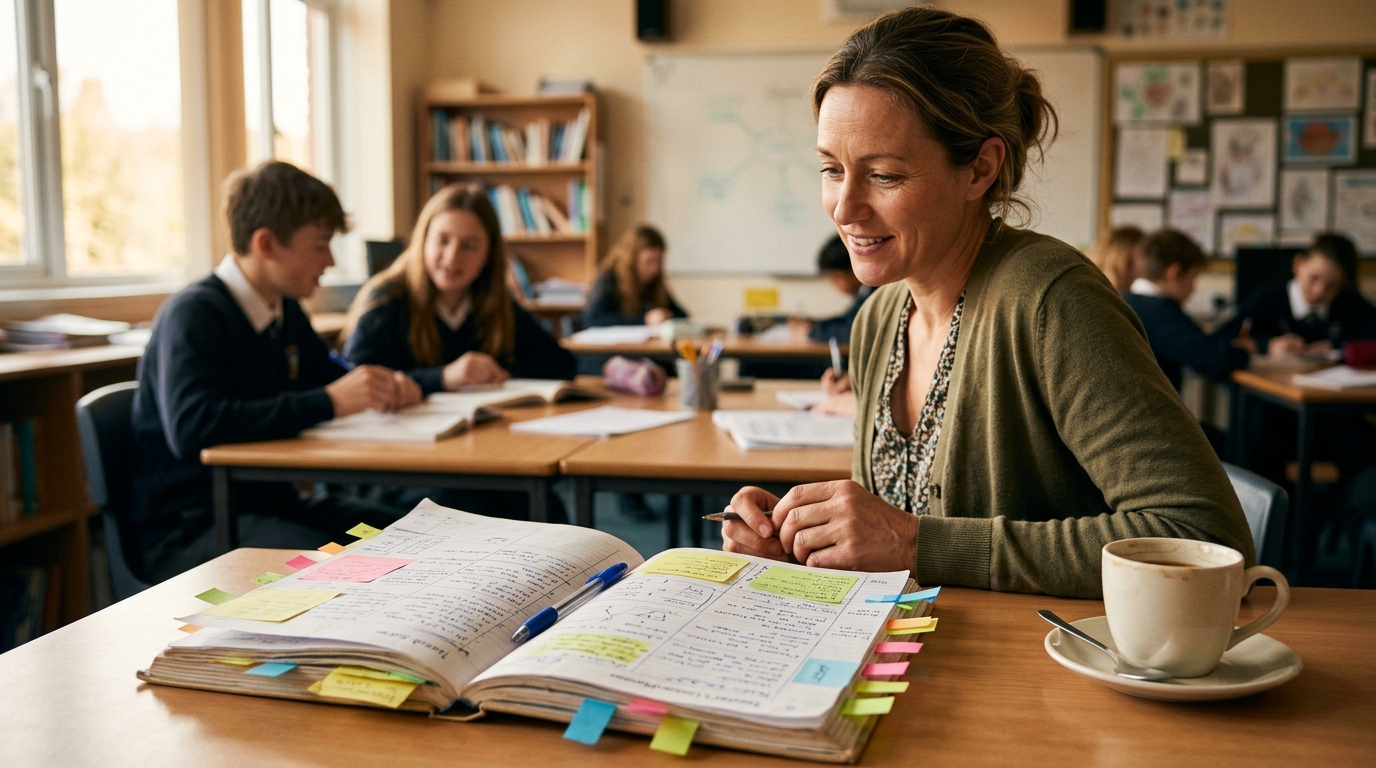
First, they identify students through more than one measure. Screening data matter, but so do course performance, writing samples, teacher observation, and attendance patterns. A student who reads adequately on a general screener may still be unable to manage grade-level historical documents or science texts.
Second, they group students by need, not just by overall low performance. One small group might work on decoding and fluency with older-student-appropriate materials. Another might focus on academic vocabulary, morphology, and unpacking complex sentences. Another might work on comprehension routines using the texts students actually encounter in class.
Third, they protect dosage. A support period that is constantly canceled for assemblies, testing, substitute coverage, or make-up work will not move reading forward. Students need regular sessions over a meaningful stretch of time.
Fourth, they monitor progress and make changes. If a student is not improving after a reasonable cycle, the school should adjust group size, instructional focus, or intensity. Tier 2 is not a waiting room.
Finally, effective schools connect intervention to Tier 1 rather than isolating it. Students should practice strategies and vocabulary that help them succeed in real classes. This is especially important in grades 6–10, where literacy demands rise across every subject.
Realistic strategies schools can use now
Schools do not need a perfect master plan before they begin. They do need honesty about capacity.
Start by mapping the current landscape. How many students in grades 6–10 are below benchmark on reading measures? How many are failing classes where reading is a barrier? How many receive no extra support at all because they are not "low enough" to qualify for intensive services? That is the missing middle.
Then choose one intervention structure the school can actually sustain. For some schools, that may be a dedicated intervention period two or three times a week. For others, it may be a semester-long reading support elective for students identified through screening and course data. The best model is not the fanciest one; it is the one that survives November, testing season, and staffing shortages.
Invest in training for the adults leading Tier 2. Secondary intervention requires knowledge of adolescent literacy, not just goodwill. Staff need support in interpreting data, teaching fluency and vocabulary explicitly, and working with complex text without reducing instruction to worksheets.
Keep content teachers in the loop, but do not make them carry the entire load. Give them a small number of shared routines that help all students: pre-teaching key vocabulary, modeling how to break down dense sentences, using text-dependent discussion, and checking for understanding before independent reading. Those moves strengthen Tier 1 and help Tier 2 gains transfer.
Finally, protect student dignity. Adolescents know when they are behind. Tier 2 works better when it is framed as support for success, not as punishment or remediation theater. Use age-respectful materials. Show students their progress. Keep expectations high.
The missing middle in secondary literacy is not a mystery anymore. It is a design problem. And while no school can solve it overnight, many can build something better: targeted, humane support for the students who are too often overlooked because they are struggling, but not struggling loudly enough.