What if a middle school reading recovery plan borrowed a few smart habits from Estonia without pretending U.S. schools have Estonia’s conditions? Here is a practical, evidence-aware approach for grades 6–12 that centers adolescent literacy, teacher time, and realistic school constraints.
When people talk about reading recovery, they usually mean the early grades. That makes sense: the strongest prevention starts young. But secondary schools live with the consequences when students reach grade 8 still struggling to read complex text, follow an argument, or write clearly about what they have learned.
In the United States, this is not a small problem. On the National Assessment of Educational Progress, often called the Nation’s Report Card, average reading scores for 8th graders in 2022 were lower than in 2019, and a substantial share of students performed below NAEP Basic. Those results matter because grade 8 is a hinge year. Students are moving from “learning to read” to reading to learn across science, history, math, and career pathways. If literacy stalls here, everything gets harder.
Estonia offers a useful provocation. On the OECD’s Programme for International Student Assessment, or PISA, Estonia has been one of the world’s strongest and most consistent performers in reading. No, U.S. schools cannot simply copy Estonia. The countries differ in size, governance, poverty rates, demographics, and social supports. Still, Estonia’s example suggests a few principles worth borrowing: teach reading as everybody’s job, intervene early when students wobble, trust teachers with strong routines, and keep the system coherent.
A grade 8 reading recovery plan “borrowed from Estonia” should not mean importing a fantasy. It should mean adapting those principles to American secondary schools as they actually are: busy, stretched, and full of young people with very different reading histories.
Why grade 8 is the pressure point
By middle school, reading gaps are no longer just about decoding. Some students still need explicit work in word recognition and fluency, yes. But many more are tripped up by vocabulary, background knowledge, syntax, stamina, and the ability to make sense of longer, more demanding texts.
That is why secondary literacy work cannot live only in the English department. Students may read a short story adequately in one class and then fall apart when asked to interpret a primary source in social studies or explain evidence from a lab report in science. Literacy in grades 6–12 is inseparable from content.
This is also the stage when motivation becomes fragile. Adolescents know when they are behind. Many have learned to hide it. They may avoid reading aloud, skim instead of read, or act indifferent before anyone can notice they are struggling. A real recovery plan has to protect dignity as much as it builds skill.
What Estonia seems to get right
Estonia’s success on PISA is not magic, and it is not a single program. It reflects a system that prizes strong teaching, broad access, and support before students drift too far off track. For U.S. educators, four takeaways matter most.
First, literacy is treated as foundational across the curriculum. Students are expected to read, think, and communicate in every subject.
Second, support is layered. Students do not have to fail spectacularly before adults respond. Schools aim to notice problems and provide help before they harden into long-term patterns.
Third, teachers work within a more coherent system. Coherence matters because students do better when expectations, assessments, and supports line up.
Fourth, the culture around reading tends to be less frantic and more steady. Improvement is built through consistent practice, not constant initiative churn.
That combination is especially relevant in U.S. secondary schools, where too many literacy efforts arrive as short-term add-ons: a new software license, a test-prep packet, a one-day training, a tutoring push with no staffing plan. Teachers can feel the burden of every good idea without the conditions to carry it out.
A realistic U.S. version of the plan
If an American district wanted an “Estonia-inspired” grade 8 reading recovery plan, it should start with a simple premise: every student in grade 8 gets stronger reading instruction, and students with the greatest needs get additional, targeted support.
That means Tier 1 first. In all grade 8 core classes, students should regularly encounter texts worth reading, clear vocabulary instruction, teacher modeling of how to unpack difficult sentences, and routine writing based on evidence. This is not a call for every teacher to become a reading specialist. It is a call for every department to use a few high-leverage literacy routines consistently.
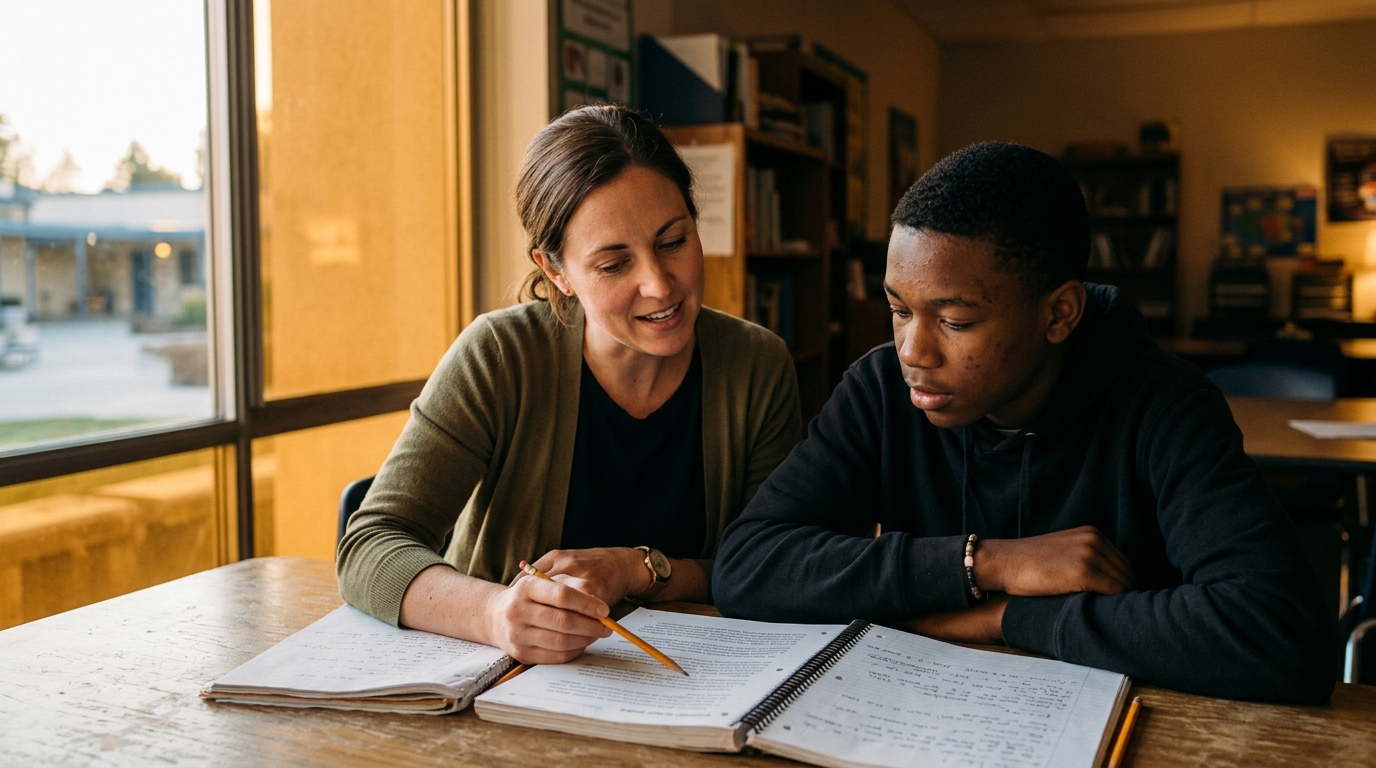
Then comes Tier 2 and Tier 3 support. Students significantly below grade level need more than encouragement. They need scheduled intervention time, small groups when possible, and instruction matched to actual needs. Some adolescents still need foundational skills work in decoding and fluency. Others need language comprehension, vocabulary, and guided reading of complex text. One-size-fits-all remediation often wastes precious minutes.
Screening matters here, but so does restraint. Schools do not need a dozen assessments. They need a small number of trusted measures, used well: a universal screener, class-based evidence, and a way to identify whether the issue is foundational reading, language comprehension, or both.
The hard parts schools cannot ignore
Let’s be honest about the barriers.
Secondary schedules are tight. Intervention periods compete with electives, special services, and staffing realities.
Teachers are already carrying heavy loads. Asking content teachers to do more without training or planning time is not a literacy strategy; it is a morale problem.
Many schools also face chronic absenteeism, which interrupts even the best-designed intervention. And in some communities, students are coping with housing instability, mental health challenges, or interrupted schooling. Reading growth does not happen in a vacuum.
There is also the temptation to confuse harder texts with better instruction. Struggle alone is not rigor. Students need support to access complexity: pre-teaching key vocabulary, chunking text, modeling annotation, rereading for a purpose, and discussing meaning before writing about it.
Finally, school leaders face the implementation trap. A district may adopt a solid vision but scatter it across too many priorities. Literacy improves when schools narrow their focus and stick with a few practices long enough to make them routine.
What teachers can do across subjects
The most effective secondary literacy moves are often simple and repeatable.
Teach key vocabulary before students read, especially words central to a unit, not just boldface terms. Model how to infer meaning from context, morphology, and examples.
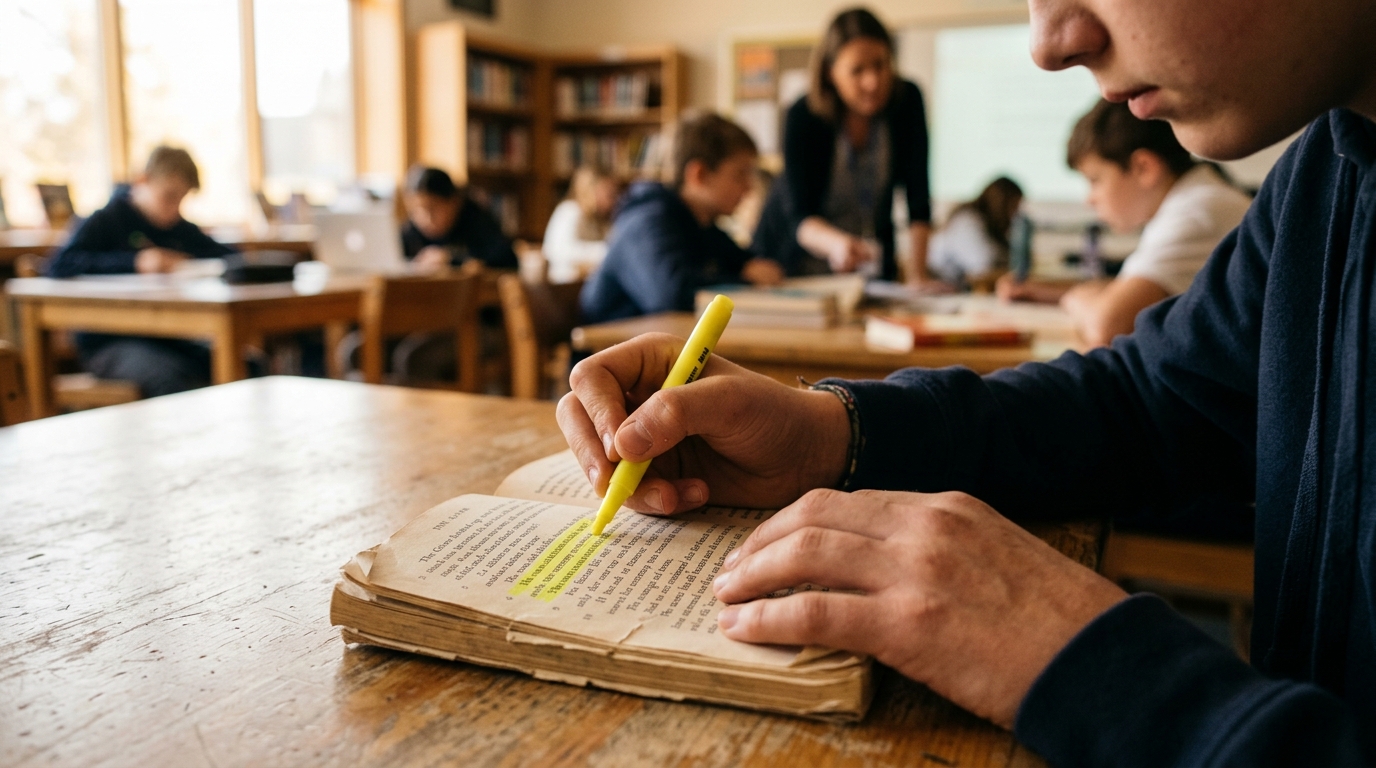
Read short stretches of complex text closely. Show students how to paraphrase a paragraph, track a claim, or identify evidence. In science, that might mean interpreting a procedure and results. In history, it might mean sourcing a document before analyzing its argument.
Use writing as a reading tool. Quick summaries, sentence frames, short evidence-based responses, and revision all strengthen comprehension.
Make fluency acceptable in middle and high school. Repeated reading, partner reading, and teacher read-alouds are not babyish when they are used respectfully with age-appropriate text.
Protect independent reading time when possible, but curate it well. Adolescents need books and articles they can actually enter, alongside support for stretching toward more complex reading.
A five-part recovery plan for grade 8
Here is a realistic blueprint for schools.
1. Screen early and sort by need
Use beginning-of-year data to identify which students need foundational support, which need comprehension support, and which need both. Recheck progress at regular intervals.
2. Build literacy into every core class
Choose two or three common routines for all grade 8 teachers: explicit vocabulary teaching, close reading of short passages, and evidence-based writing. Keep the routines simple enough to sustain.
3. Create protected intervention time
If possible, build a daily or several-times-weekly intervention block. Use trained staff strategically, including reading specialists, special educators, and well-supported interventionists.
4. Train teachers with examples, not slogans
Professional learning should include model lessons, common planning time, and materials teachers can use tomorrow. Secondary teachers need subject-specific literacy support, not generic reminders to “do more reading.”
5. Track progress and adjust quickly
A recovery plan should function like a problem-solving cycle. If a student is not improving, change the intensity, grouping, or instructional focus rather than waiting until the next semester.
The goal is not to become Estonia
The point of borrowing from Estonia is not imitation. It is clarity. Strong literacy systems do a few things well: they intervene before students are written off, they expect reading and writing across subjects, and they make support coherent instead of accidental.
For U.S. secondary schools, especially in grade 8, that is the challenge and the opportunity. We do not need a miracle program. We need a plan sturdy enough for real schools: one that respects teachers’ time, responds to students’ actual reading profiles, and treats adolescent literacy as the shared work of the whole school.
If we do that consistently, grade 8 can become less of a warning light and more of a turning point.