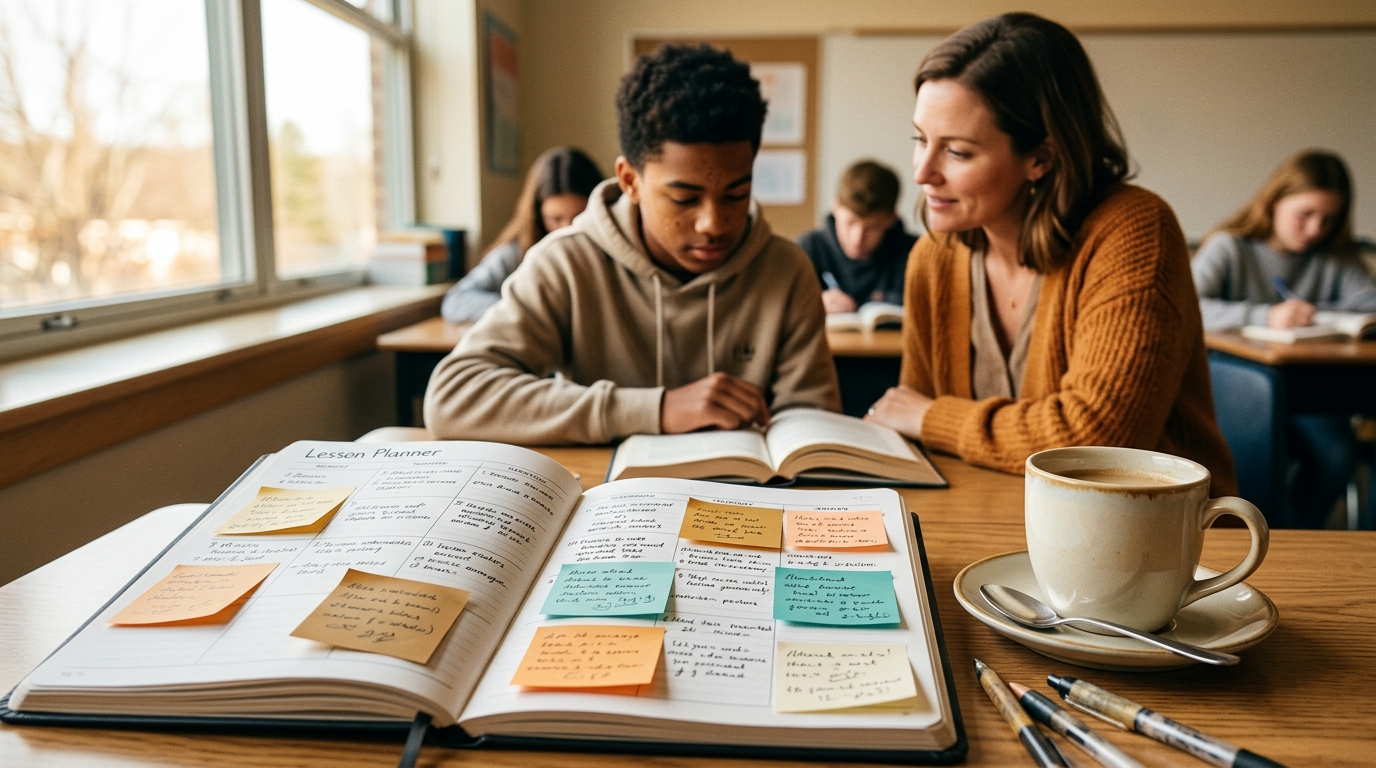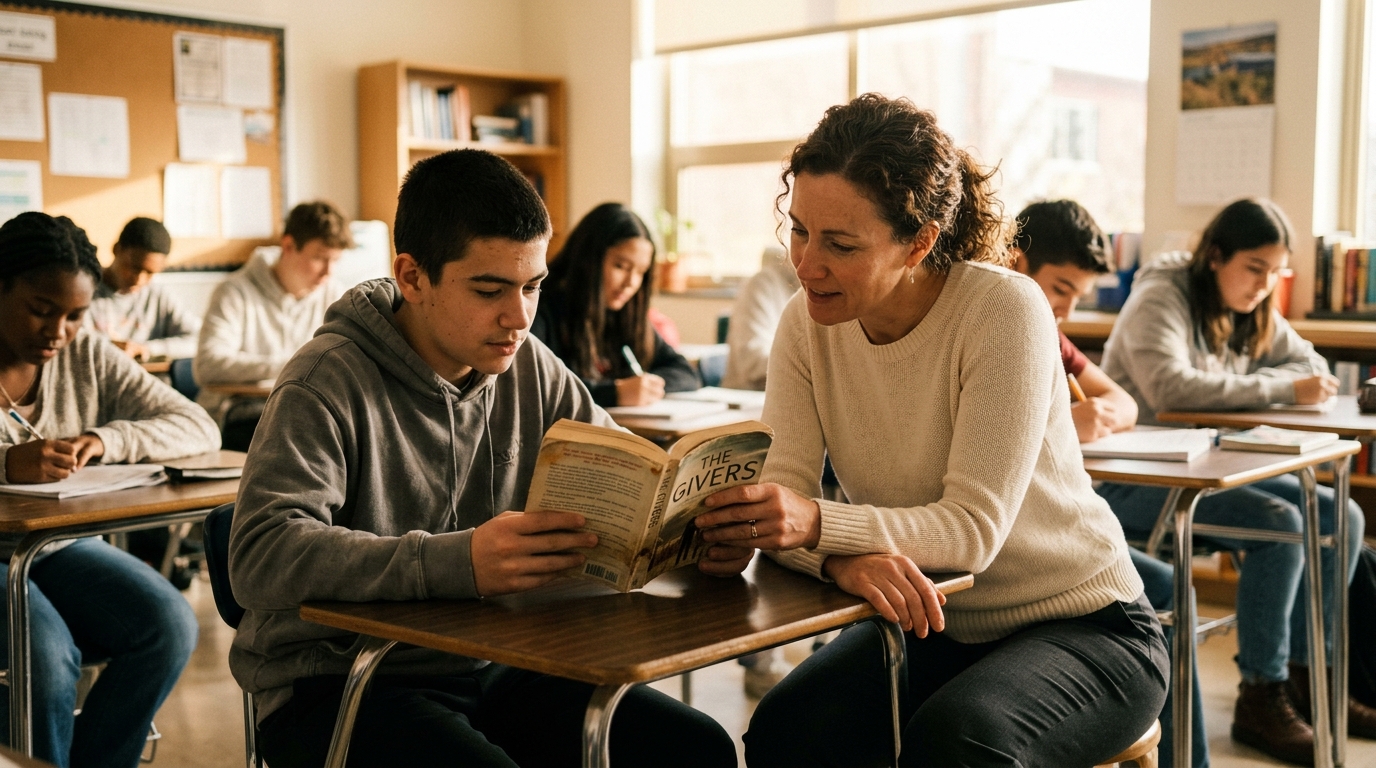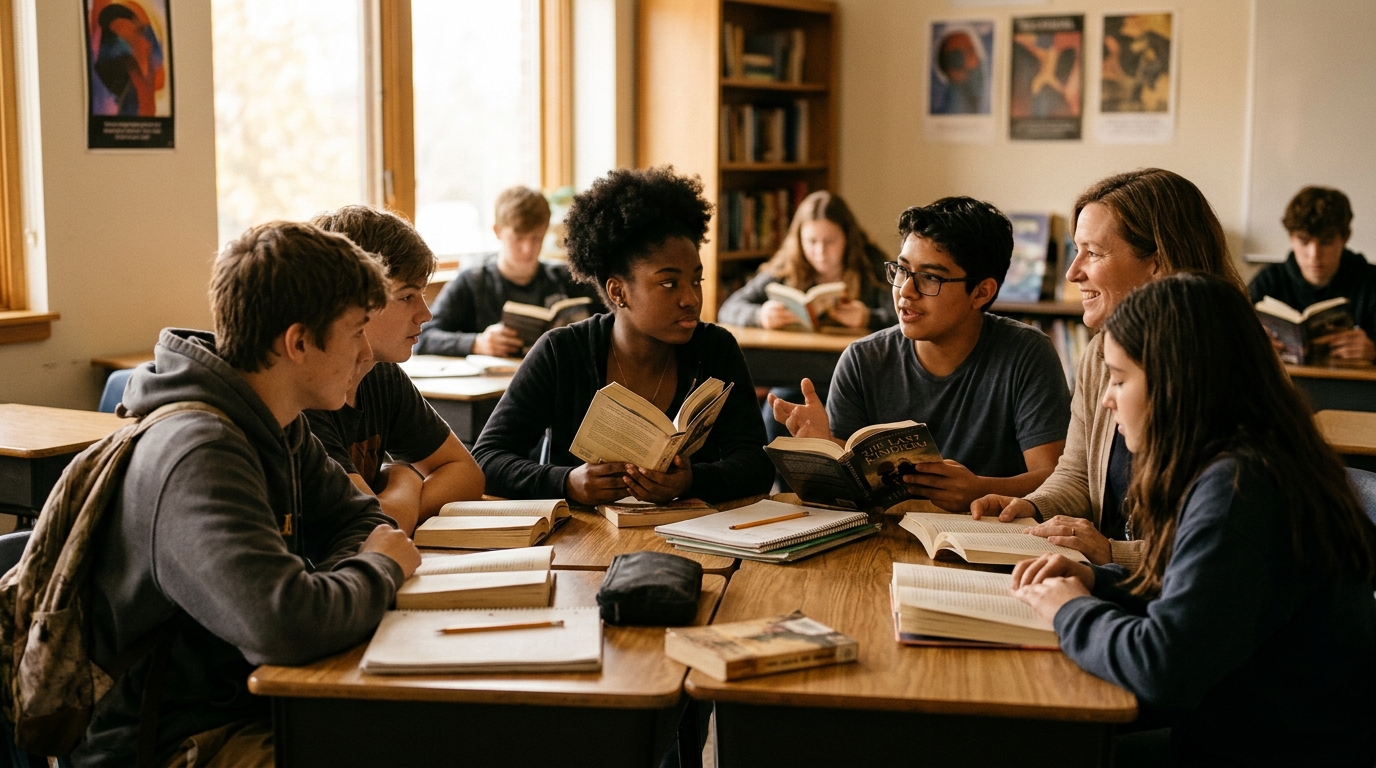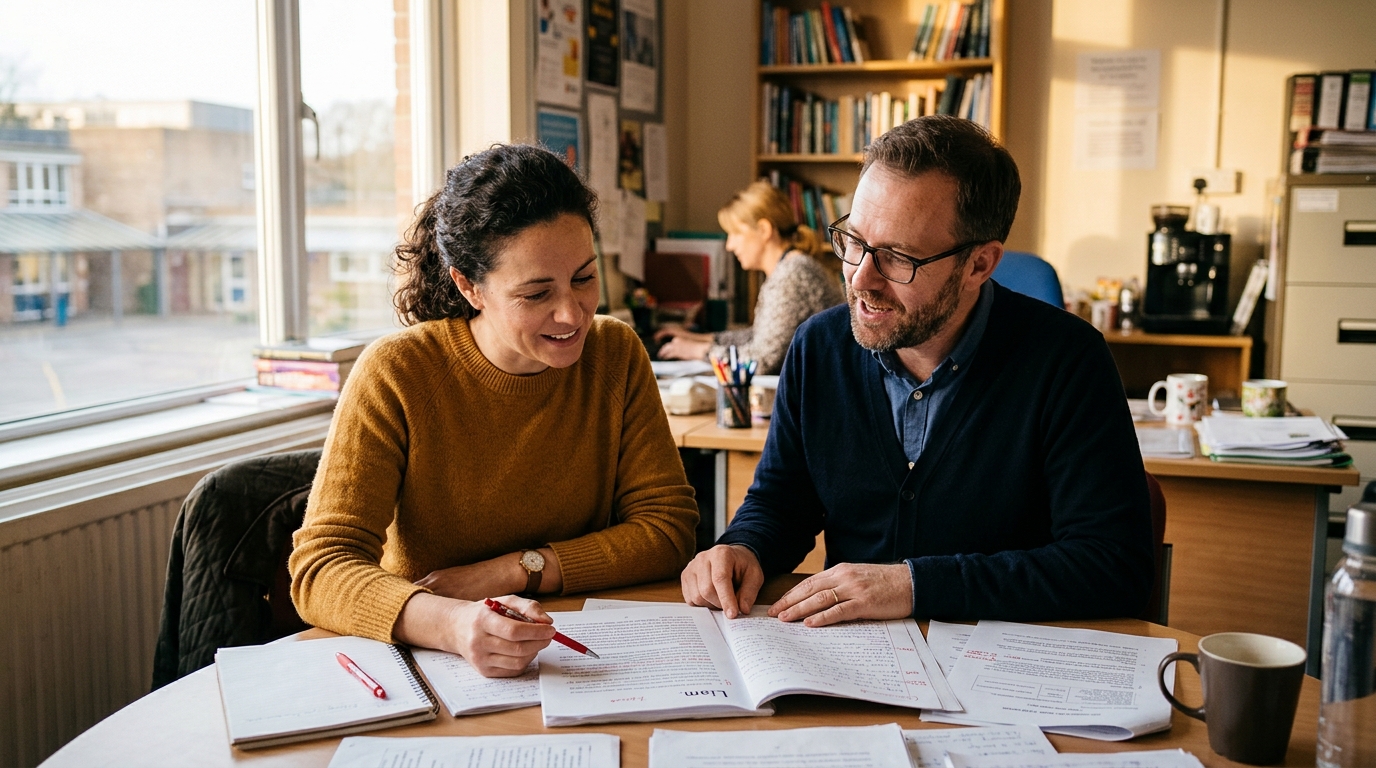
A good sub plan keeps the day calm. A great one also strengthens adolescent reading without asking substitutes to do the impossible.
The missed opportunity hiding in substitute plans
In many middle and high schools, substitute days are treated as survival days. Keep students safe, keep them reasonably busy, and hope the class stays on track. That is understandable. Teachers are often writing plans while sick, caring for family, or covering one more unexpected disruption in a school year already stretched by staffing shortages, large class sizes, and uneven attendance.
But there is another way to think about sub plans in grades 6–12: as a quiet, repeatable chance to support reading.
That matters because secondary schools are carrying a real literacy challenge. On the 2024 National Assessment of Educational Progress, average reading scores for both 8th and 12th graders were below pre-pandemic levels, and large shares of students performed below NAEP Proficient. NAEP is not a classroom grading tool, but it is a trusted national snapshot, and the snapshot is clear: many adolescents need more support reading complex text.
The problem is not that secondary teachers do not care about literacy. They do. The problem is that time is thin, course content is packed, and many teachers were not given extensive training in reading intervention. A substitute day will not solve that. Still, if schools design smarter plans, it can become one small lever that helps rather than one more lost day.
What makes a sub plan work as intervention
Reading intervention in secondary grades does not have to mean a full diagnostic program run by a specialist. On a sub day, that is unrealistic. The substitute may not know the content, may be covering multiple classes, and may be walking into a room of students who test routines quickly.
So the goal should be modest and practical: give students structured reading practice that improves comprehension, vocabulary, fluency, and writing about text, while being simple enough for a guest teacher to manage.
The best sub plans for literacy share four features:
First, they are routine. If students recognize the format, less time is lost in explanation and behavior management.
Second, they are short-cycle. A single class period should include one text, a few high-value tasks, and a clear product to turn in.
Third, they are scaffolded. Students should not be handed a dense article and told to “read and answer questions.” They need chunked text, a purpose for reading, key vocabulary support, and response frames.
Fourth, they respect secondary students. Teenagers know when work is filler. Strong sub plans use age-appropriate topics, real ideas, and tasks that ask students to think.
A simple model: read, annotate, write, discuss
One of the most reliable structures is a four-part lesson: read, annotate, write, discuss.
Start with a short text students can actually finish in one period. That might be a current events article, a science explanation, a historical speech excerpt, a technical passage, or a short literary text. In secondary classrooms, disciplinary literacy matters: students should practice reading in the kinds of texts each subject uses.
Before reading, provide three to five key words with student-friendly definitions. This is not a full vocabulary unit. It is just enough support to lower the barrier to entry.
Then give students a focused annotation task. Ask them to underline the main claim, circle unfamiliar words, mark one surprising detail, and write a margin note summarizing each section in five words or fewer. Those moves are manageable for a substitute to monitor and useful for students who struggle to hold onto meaning across a whole page.
After reading, assign a short written response. Good prompts are specific: “What is the author’s main point, and which two details best support it?” or “How does this paragraph change your understanding of the event?” A paragraph frame can help students who need more structure.
Finally, include a brief partner or table discussion with two or three questions. Discussion is not extra. It gives adolescents a chance to rehearse ideas orally, which often strengthens comprehension before writing.
Why this helps struggling readers
Secondary students with reading difficulties often need explicit support with comprehension and vocabulary, not just more independent reading time. They benefit from repeated routines, teacher modeling, and chances to process text in small pieces.
A substitute cannot replace skilled intervention, but a well-built plan can still reinforce those habits. Annotation slows reading down. Chunking reduces overload. Brief writing pushes students to return to the text for evidence. Vocabulary previews make content more accessible. Repeated use of the same routine helps students know what successful reading looks like.
This approach also protects dignity. In grades 6–12, many students who read below grade level are deeply aware of it. A good sub plan avoids public embarrassment. Everyone reads the same topic, everyone uses the same structure, and supports are built in rather than singled out.
Lessons from stronger systems
High-performing systems offer a useful reminder: literacy improvement is not only the job of the English department. Countries and systems that do well on international measures such as PISA, including places like Singapore, Estonia, and parts of Canada, tend to treat reading as a cross-curricular responsibility supported by coherent routines, strong curriculum, and teacher preparation.
That does not mean schools in the United States can copy another country’s model overnight. Context matters. Funding, staffing, local standards, and student needs are different. But the principle travels well: adolescents become better readers when every subject teaches students how to make meaning from text.
Sub plans can reflect that principle. A social studies sub plan can teach sourcing and claim analysis. A science sub plan can ask students to interpret a process explanation or compare data statements. A CTE class can build vocabulary and procedural reading. Literacy is not separate from content; it is how students access content.
What schools often get wrong
Too many substitute plans rely on one of two extremes: busywork or full-speed-ahead instruction that assumes the substitute can teach specialized material flawlessly.
Busywork wastes time and sends the message that reading is optional when the regular teacher is out. Overly ambitious plans often collapse under real-world conditions.
Another common mistake is assigning long online reading with little accountability. If the text is too hard, the platform is glitchy, or the directions are unclear, many students disengage fast.
A better target is productive simplicity. One strong text. One repeatable protocol. One clear written product.
Concrete strategies schools can use now
Schools do not need a new initiative to start. They need a manageable system.
First, create a shared bank of secondary sub plans by department or grade band. Include 20 to 30 ready-to-use literacy lessons tied to course themes. That lowers the burden on teachers writing plans at the last minute.
Second, standardize a few reading routines across the building. If students regularly summarize paragraphs, annotate claims, and write evidence-based responses, a sub day feels familiar instead of chaotic.
Third, build in scaffolds by default: chunked passages, vocabulary boxes, sentence starters, and audio options when available. Universal supports help more students than we sometimes expect.
Fourth, keep the text length reasonable. For many adolescents, especially those reading below grade level, a shorter well-chosen text produces better thinking than a long unread one.
Fifth, ask departments to design text sets for different subjects. English, history, science, health, and electives can all contribute. That spreads the work and reinforces that literacy belongs everywhere.
Sixth, give substitutes a one-page teacher guide with timing, likely student questions, and what completed work should look like. Clear directions matter as much as strong materials.
Finally, review the work students produce. If sub-day reading tasks disappear into a folder and never get mentioned again, students notice. Even a brief follow-up discussion or quick feedback loop tells them the reading counted.
Small moves, real gains
No one should pretend that substitute plans will reverse national reading trends. Schools need stronger attendance, more intervention capacity, better access to trained specialists, and sustained support for adolescent literacy. Those are big lifts.
But small moves matter too. In a year shaped by interruptions, every class period is valuable. When sub plans are built to strengthen reading rather than merely occupy time, schools protect learning, support content access, and give students one more chance to practice the habits that strong readers use.
That is not a gimmick. It is a realistic response to the world schools actually live in: constrained, imperfect, and still full of opportunities to do students some good.